Two kinds of hikers show up at the trailhead unprepared.
The first carries a 200-piece drugstore kit with rolled gauze, a CPR face shield, a SAM splint, and a packet of wound closure strips. They’ve never opened any of it.
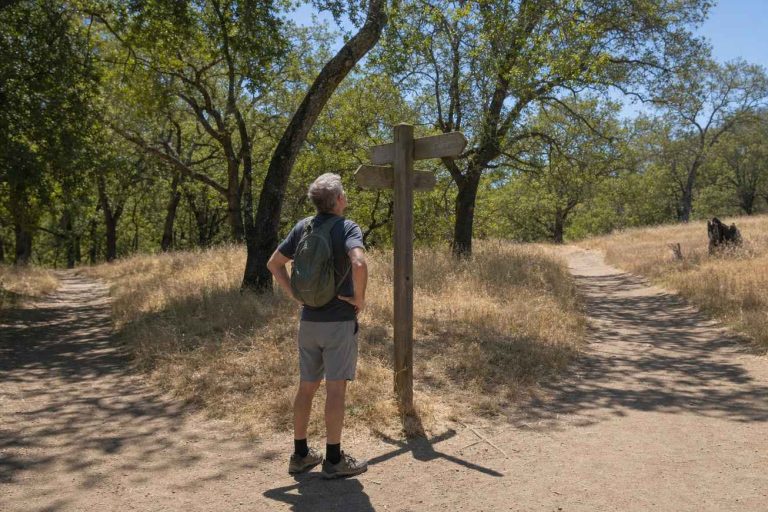
The second carries nothing, reasoning that a 3-mile loop through a state park can’t possibly go wrong.
Neither is right. On a 2 to 4 mile day hike near a trailhead, you’re treating blisters, small scrapes, a turned ankle, a sting, or a headache.
You’re not performing backcountry wound care.
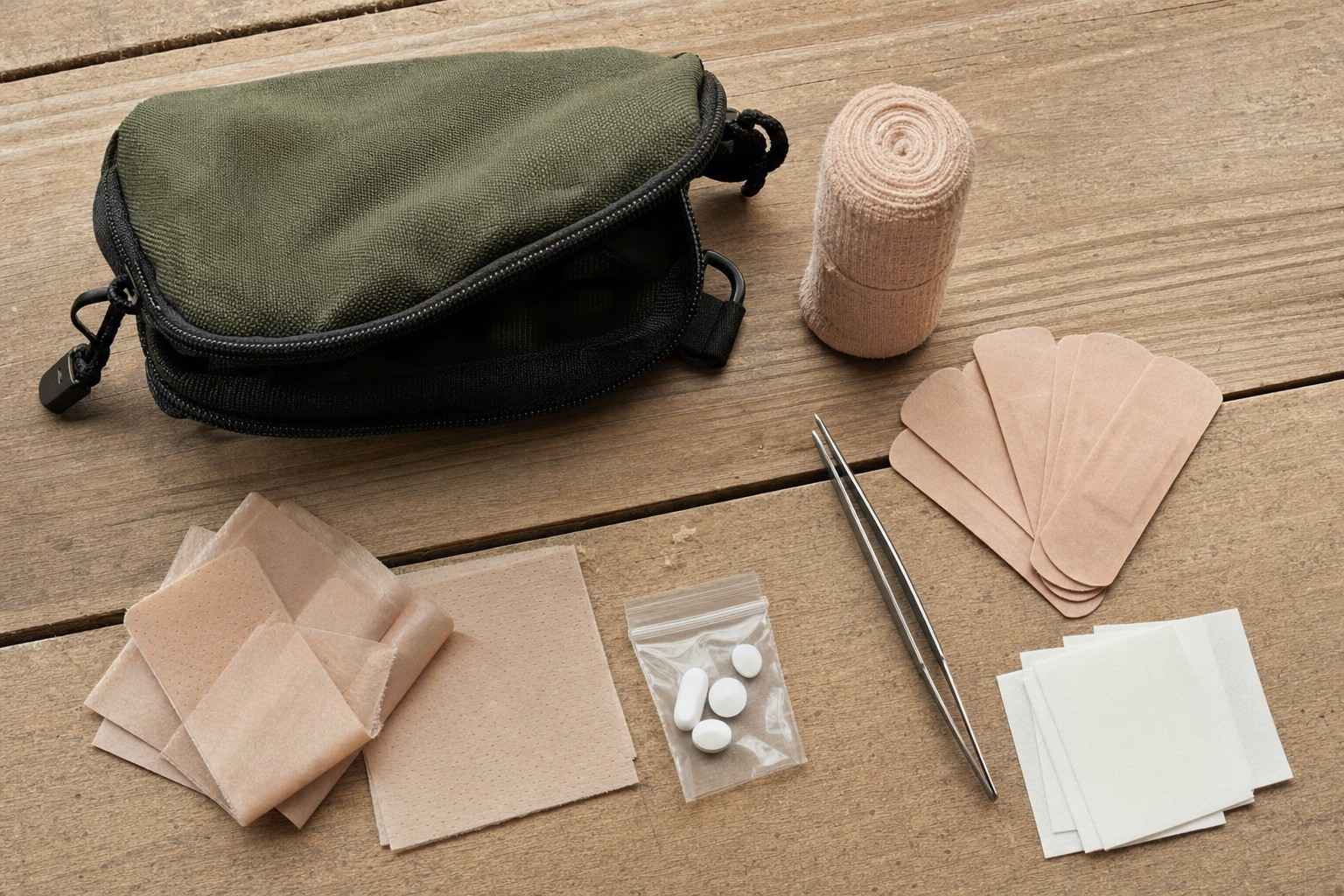
A small pouch lighter than a paperback handles everything a day hike actually throws at you.
This is that kit.
What You’re Actually Treating
Before you build a kit, it helps to be honest about what happens on short day hikes.
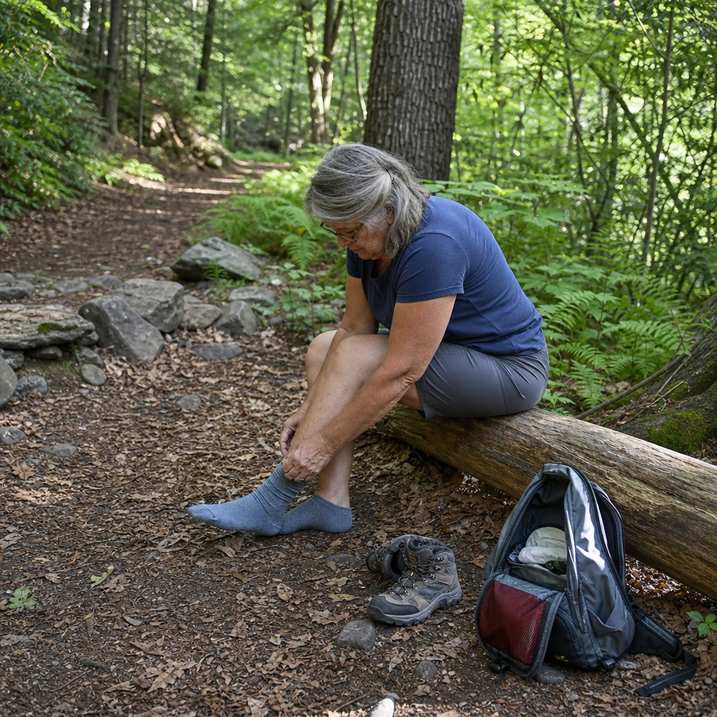
Blisters are far and away the most common problem. They start as a hot spot on a heel or toe and most hikers ignore the warning until the skin has broken.
By then, the hike is effectively over.
The second category is scrapes and cuts from a stumble on a root or loose rock. These need cleaning and a bandage, nothing more.
Third is the turned ankle, usually caught mid-step on uneven ground. A mild sprain hurts, but with an elastic wrap and a trekking pole, most hikers can walk back to the car themselves. The more serious injuries go to a clinic, not your kit.
Stings, allergic reactions to plants, and the dull headache from mild dehydration round out the list. These are real. They’re also predictable, and a small handful of items covers all of them.
A small pouch lighter than a paperback handles everything a day hike actually throws at you.
What Goes in the Real Kit
Here’s what actually earns its space:
- Blister care: moleskin sheets or gel blister pads, plus athletic tape or medical tape. Apply at the first hot spot, not after the blister forms.
- Adhesive bandages: a small assortment of sizes for scrapes and cuts.
- Elastic bandage wrap: for wrapping a turned ankle and stabilizing it for the walk out.
- Antihistamine tablet: for bee stings or unexpected plant contact.
- Pain reliever: ibuprofen or acetaminophen for a headache or minor ache.
- Tweezers: for splinters and ticks.
- Personal medications: yours, not a generic list. In a small labeled bag.
- Medication card: a note listing what you take, any allergies, and an emergency contact. Folded behind your ID.
That’s it. A quart-size zip bag or a dedicated small first-aid pouch carries all of it without bulk.
The blister items are the core. If you carry nothing else, carry moleskin and tape.
The 200-Piece Kit Problem
Most drugstore first-aid kits are built for a family camping trip, a worksite, or a car glove compartment. Rolled gauze, SAM splints, sealed alcohol prep pads, and items that require a medical background to use. None of it belongs on a day hike.
According to the American Hiking Society, most day-hike injuries are minor and handled with basic supplies. The right question isn’t “what could conceivably happen?” It’s “what am I likely to need on a 2-4 mile trail?”
A large kit also has a practical problem: hikers leave it in the car because it’s heavy and they figure the trail is short. Your first-aid kit is only useful if it’s on your back. A small pouch you’ll actually carry beats a complete kit you’ll leave at the trailhead.
Blister Care: The One Thing You Can’t Skip
Blister prevention starts before you lace up.
Check your socks. Moisture-wicking hiking socks reduce friction significantly compared to cotton athletic socks. Cotton holds sweat against the skin; synthetic or merino wool wicks it away.
Socks matter more than most hikers expect.
On the trail, pay attention to any burning or rubbing sensation. That’s the hot spot. Stop, sit on a log or rock, and deal with it there.
A piece of moleskin cut to cover the friction point and taped in place takes three minutes and often saves the rest of the hike.
Waiting until the skin has broken is a different problem entirely. A raw blister hurts with every step and is prone to infection. Catching the hot spot early is the entire strategy.
The beginner gear checklist covers socks, footwear fit, and other foot-care choices that reduce friction from day one.
What Actually Helps a Turned Ankle
Most ankle sprains happen on descents, not climbs. Slow down going downhill.
That single habit prevents a significant share of ankle injuries. Downhill sections look easier than uphills, but your foot lands on surfaces it can’t fully predict, and tired legs react more slowly. Taking the descent at a deliberate pace is the real prevention.
If a sprain happens anyway, the elastic bandage wrap earns its place. Wrap the ankle snugly from the ball of the foot upward, overlapping each layer by half. Use a trekking pole on the downhill side for stability.
With a mild sprain, most hikers can walk out at a reduced pace.
Anything beyond mild pain or visible swelling is a reason to end the hike and get evaluated. The wrap and the pole are a walk-out strategy, not a substitute for care.
This guide to preventing common hiking injuries after 50 covers ankle sprains, descent technique, and the other main threats.
Most ankle sprains happen on descents, not climbs. Slow down going downhill.
The Over-50 Additions
A standard first-aid kit doesn’t account for personal health complexity. Hikers over 50 often carry medications for blood pressure, cholesterol, diabetes, or thyroid conditions. Some of those interact with heat, exertion, or antihistamines in ways worth knowing ahead of time.
This is a pharmacist question, not trail advice.
Before your first few hikes, ask your pharmacist whether any of your medications affect heat tolerance or exertion limits. Ask which over-the-counter pain relievers are safe for you. That conversation takes ten minutes and the answers belong on your medication card in your kit.
Bring enough medication for longer than you expect to be out. Hikes run long, heat slows you down, and blisters cost time. A small extra supply is cheap insurance.
According to the Wilderness Medicine Society, adults managing chronic conditions benefit most from pre-trip preparation, not from larger kits. The preparation is the safety net.
Your first hike should be 2-4 miles round trip, regardless of elevation gain. That range keeps you close to the trailhead and means any small problem is a short walk from the car.
When the Kit Isn’t the Answer
A first-aid kit handles minor injuries. Anything beyond that gets you off the trail.
A sprain that won’t bear weight. Chest pain or significant shortness of breath. Severe allergic reactions.
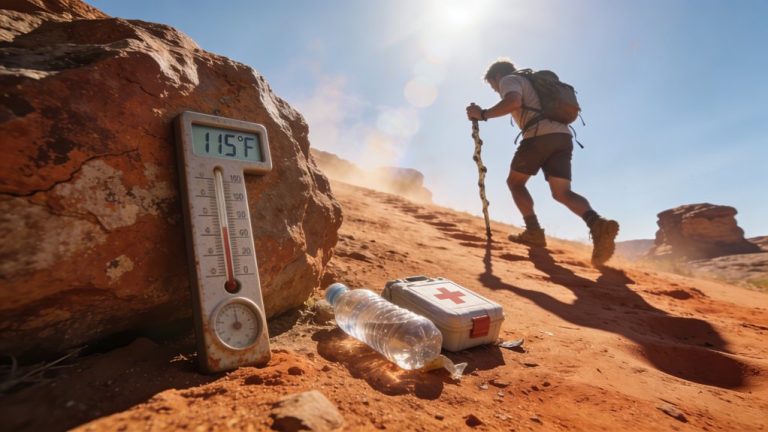
Signs of heat exhaustion that don’t improve quickly with shade, rest, and water. These end the hike, and someone calls for help.
Knowing that the kit has clear limits is part of being prepared. It doesn’t make the kit less useful. It makes it honest.
The medical guardrail worth stating plainly: carry a first-aid kit for blisters, minor scrapes, and a turned ankle. For anything more serious, the right move is to get off the trail and seek care. Trail first aid is stabilize and go, not manage and push on.