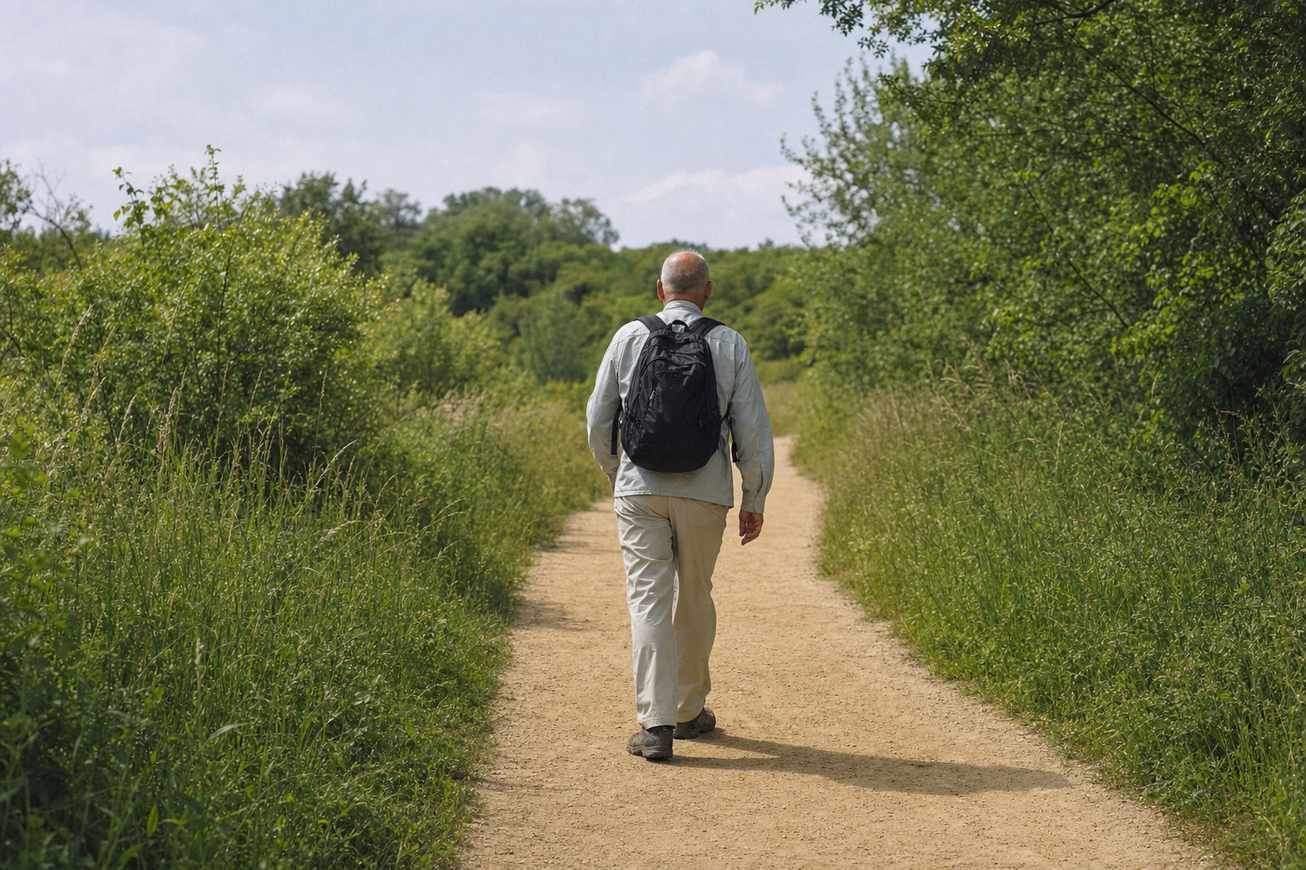
According to the CDC, tick encounters concentrate in leaf litter and low brush along trail edges, not in the open center of established paths.
That single fact shapes most of what follows.
This is not a guide to treating tick bites or poison ivy rashes. For anything involving a rash, fever, or an embedded tick you can’t safely remove, your doctor is the right call.
What this covers is the prevention side: the habits that keep most encounters from happening at all.
A calm two-minute routine handles the bulk of the risk. Adults starting hiking after 50 have good reason to take it seriously. CDC surveillance data shows reported Lyme disease cases peak in children and again in adults in their 50s and 60s.
Taking these simple steps isn’t paranoia. It’s proportionate.
The Trail Center Is Your Best Defense
The biggest single thing you can do for tick prevention is walk the center of the path.
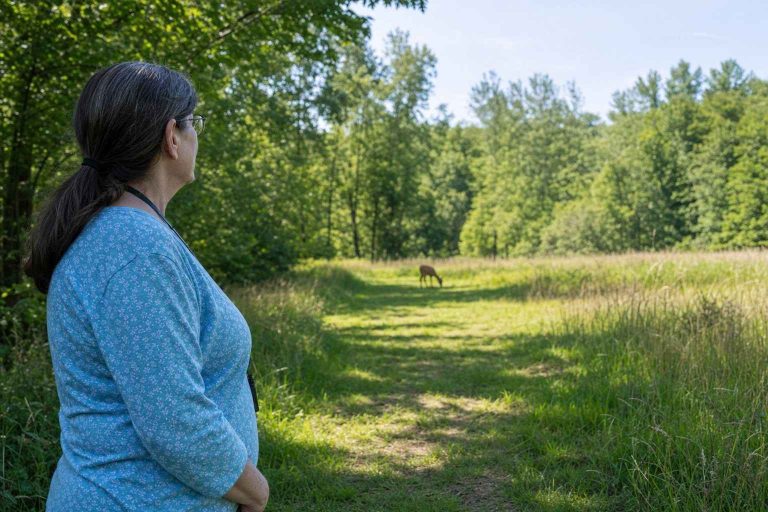
Ticks do not jump or fly. They wait on grass tips and low shrubs in a posture called questing, front legs extended, ready to grab passing clothing or fur. The center of a well-maintained trail is almost entirely clear of that vegetation. Step into the brush to get a photo, and you’ve moved from low-risk to moderate-risk in a few seconds.
Staying on the marked path isn’t just good navigation practice. It’s your first line of tick defense.
The same logic applies to poison ivy and poison oak. Both plants grow along trail edges, not in the middle of maintained paths. “Leaves of three, let it be” is the right mnemonic. The better move, though, is keeping enough distance that you rarely need to identify them at all.
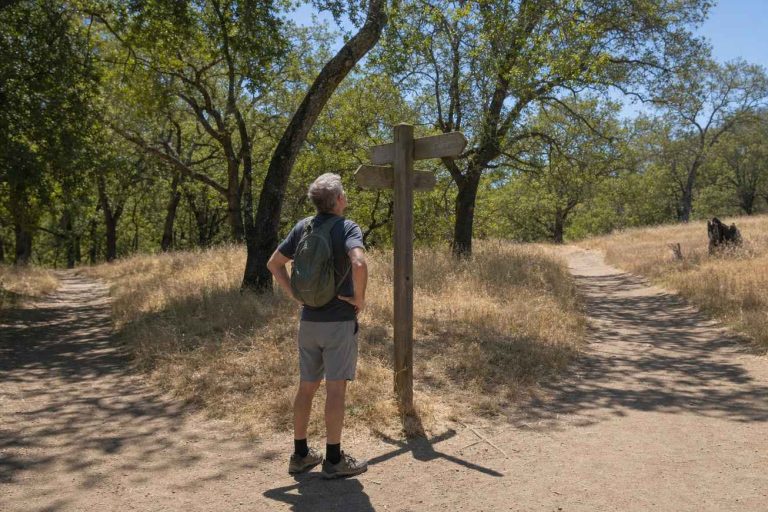
Our guide to staying on the marked trail and reading junctions confidently covers the habits that make this automatic on any hike.
Clothing That Actually Helps
Long pants matter most in brushy terrain. In open parkland with a wide mowed path, shorts are fine.
On a trail that cuts through oak scrub or tall meadow grass, covering your legs is worth the slight warmth.
Light-colored clothing serves a practical purpose: ticks are dark-bodied and much easier to spot on light fabric than on dark.
This sounds minor. On a post-hike check, it makes a real difference.
Tucking pants into socks closes the gap ticks use to reach skin. It looks a little awkward. It works.
Tucking pants into socks closes the gap ticks use to reach skin. It looks a little awkward. It works.
For a fuller picture of what to wear on different terrain and in different seasons, the guide on clothing choices for your first hike lays out the season-by-season decisions.
EPA-Registered Repellent on Shoes and Socks
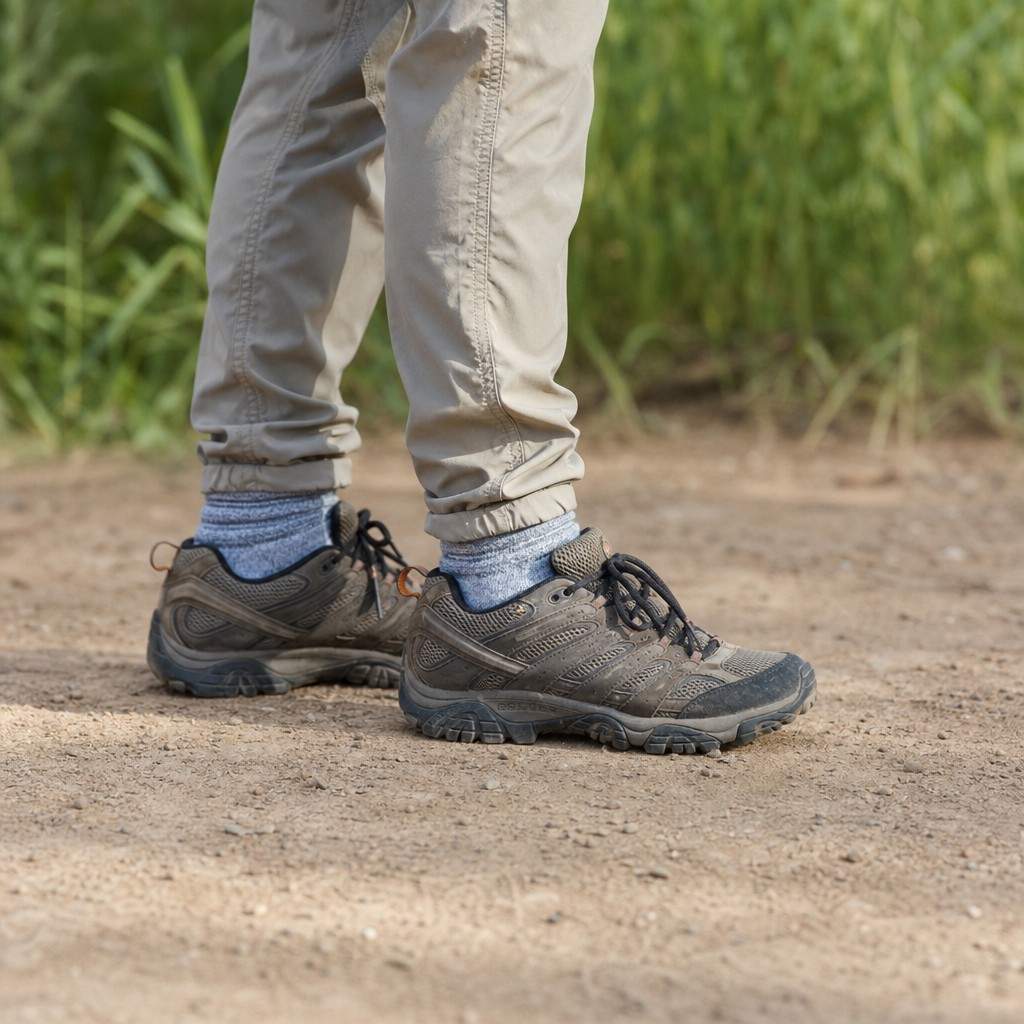
Repellent on shoes and socks is more effective per square inch than almost anywhere else you can apply it. Ticks climb from the ground up. Shoes and socks are the first contact point.
According to the CDC, repellents registered with the EPA are effective against ticks when used as directed. That includes products containing DEET, picaridin, or IR3535. A standard DEET-based spray at 20-30% concentration does the job. Apply it to shoes and the lower part of pants before you head out.
Apply repellent to shoes and sock cuffs before you set out, not at the trailhead. Giving it a few minutes to dry means better adhesion and less transfer to your hands.
One note for adults managing multiple medications: some bug repellents can cause mild skin irritation. If you have sensitive skin or use topical prescriptions, check the product label before applying it anywhere near your face or neck.
Poison ivy and poison oak are not affected by repellent. For those plants, clothing coverage is the only reliable barrier.
The Post-Hike Tick Check
Ticks move slowly and spend time finding a good spot before attaching. Most attachments happen hours after exposure, not immediately. That gives you a window.
The check takes about two minutes. The spots ticks prefer are predictable: behind the knees, at the waistband, along the hairline, under the arms, and around the ankles and groin. Run your hands systematically through those spots. Use a mirror for the hairline and upper back if you’re checking alone.
Showering within two hours of returning home removes unattached ticks and lets you do a full check with soap and water. The CDC specifically recommends this timing.
Start with trails under 300 feet of elevation gain for your first five hikes.
Those are also the shorter, well-maintained paths where tick habitat is minimal. A beginner trail with mowed margins and a clear center is genuinely lower-risk than a narrow trail through dense brush.
After Possible Poison Plant Contact
If you suspect contact with poison ivy or poison oak, the window to act is short. The oil from those plants, called urushiol, begins binding to skin within minutes.
Wash the exposed area with soap and water as soon as you can. Wash any clothing that may have contact before wearing it again, and run it through a full wash cycle.
Urushiol can stay active on fabric for months.
The rash itself is not contagious. It can appear in waves over several days because different areas of skin absorbed different amounts of oil and react at different rates.
That’s not the rash spreading from contact.
If the rash covers a large area, appears near your eyes or mouth, or is accompanied by swelling beyond the contact area, that is a conversation for your doctor.
Your first hike should be 2-4 miles round trip, regardless of elevation gain.
That distance keeps you on the simpler, well-traveled paths where all of the above prevention is easiest to apply. Shorter trails mean less time in brushy terrain and cleaner margins. You also get home faster, which means you can shower and check sooner.
The two-minute routine is genuinely that: a routine. A little clothing attention before you leave, repellent on your shoes, the center of the path, and a quick check when you’re home. None of this is complicated, and none of it should keep you off the trail.