The trail safety world has a strange habit of writing for worst-case scenarios. Search online and you’ll find serious guides to charging bears and stalking mountain lions. Often on the same websites recommending the beginner loops you’re planning.
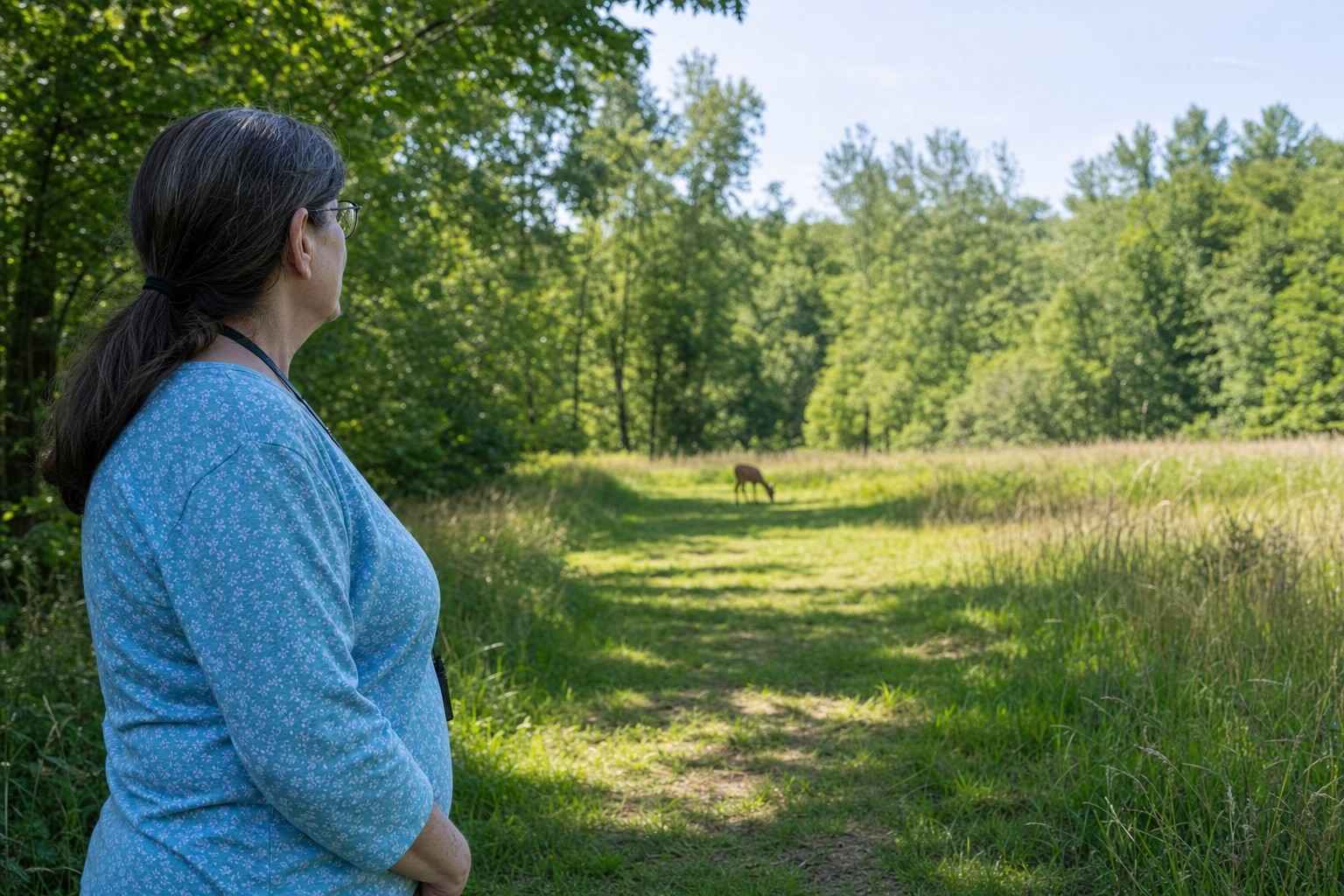
That gap between the content and the reality is worth naming. On a busy, well-marked day trail, the wildlife you’re likely to meet is a deer grazing near the path, a squirrel sprinting across the dirt, or a snake warming itself on a flat rock. Dangerous encounters do happen. They’re also genuinely rare on the kind of trails beginners start on.
Understanding the actual base rate is the most useful piece of wildlife information you can carry into the woods.
What You Actually See on Beginner Trails
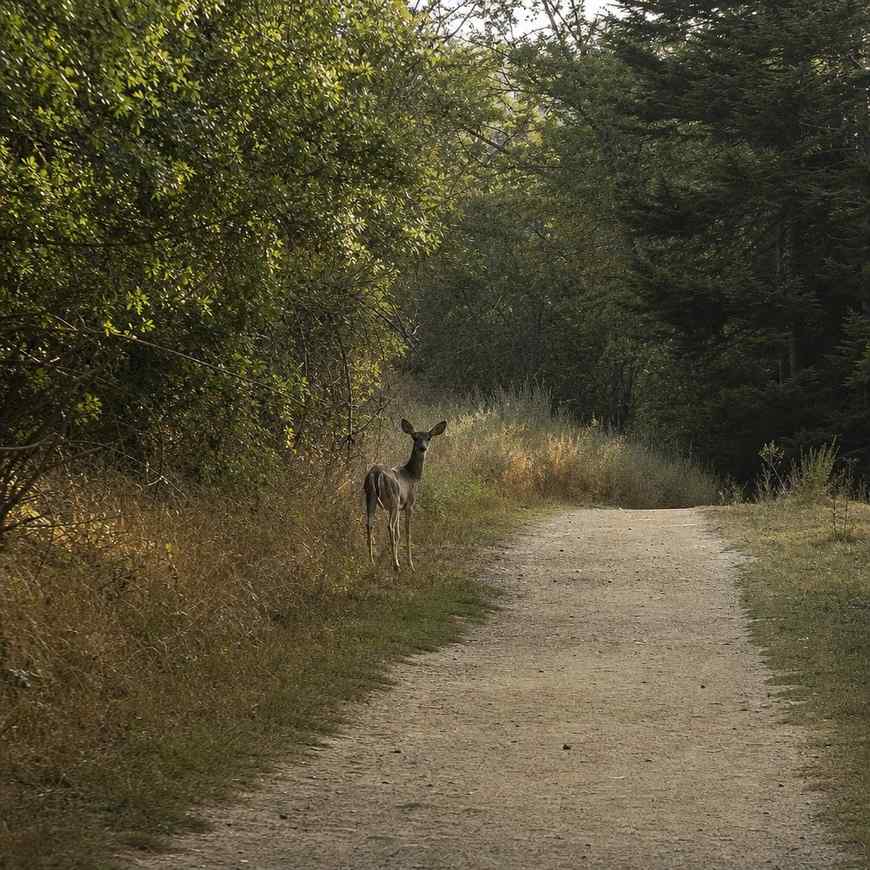
Beginner trails are popular, and popularity is a deterrent.
Deer, squirrels, rabbits, songbirds, and the occasional lizard make up the majority of encounters on the kinds of trails covered in a guide to choosing your first hiking trail. They see more foot traffic in a weekend than a remote wilderness area sees in a month.
That foot traffic also works in your favor. Most animals habituate to human presence on high-traffic paths.
The deer you spot near a popular trailhead has seen hundreds of hikers. It will probably glance up, hold still for a moment, and go back to what it was doing.
The honest list: deer, squirrels, birds, rabbits, the occasional lizard, and on a small percentage of hikes a snake on a warm rock. That’s most of it.
On a busy, well-marked day trail, the wildlife you’re likely to meet is a deer grazing near the path, a squirrel sprinting across the dirt, or a snake warming itself on a flat rock.
Snakes: The Fear vs. the Reality
A snake on the trail is the encounter that stops people cold, and the fear is usually bigger than the risk.
Most snakes on hiking trails are nonvenomous, and the ones that are venomous aren’t looking for a fight. Snakes sun themselves on warm rocks and flat trail sections because the surface holds heat.
They’re not waiting for you.
A snake you can see is a snake you can walk around.
The behavior is simple. Stop when you spot one. Give it a moment. Walk around it with plenty of space, staying out of striking range. Striking range for most rattlesnakes is roughly half their body length, so a few feet of clearance is more than enough.
Never poke at a snake with a stick, try to move it, or get closer for a photo. A snake that feels cornered will defend itself.
One that’s left alone almost never will.
According to the American Hiking Society, the vast majority of snakebites in the US involve someone who was attempting to handle or harass the snake. The message isn’t to be afraid; it’s to be respectful.
The Noise Habit That Prevents Most Surprises
Animals surprise you when they don’t know you’re coming. The fix is simple, and it costs nothing.
Make noise on blind corners and through dense brush. Talk to a companion. Clap your hands occasionally. Some hikers call out “hey bear” not because bears are likely, but because any animal with room to move will do so when it hears humans approaching.
Most animals want nothing to do with you. Given advance notice, they move off the trail before you arrive. The encounters that go sideways are almost always the ones where a hiker came around a corner silently and startled an animal at close range.
This is especially worth remembering in the late evening or early morning, when deer and other animals are more active and closer to trail corridors.
Larger Animals: What to Do
The occasional encounter with a larger animal, such as a coyote, elk, or deer with fawns, calls for calm and distance rather than alarm.
The behaviors hold across most species: don’t run, don’t approach, and back away slowly while facing the animal. Running triggers a chase response in predators. Moving slowly and deliberately communicates that you’re not prey and not a threat.
National Park Service wildlife guidelines recommend maintaining at least 25 yards (about 75 feet) from most wildlife, and at least 100 yards from predators like bears and mountain lions. A practical rule: if the animal changes its behavior when it notices you, you’re already too close. Back up quietly.
Making yourself look larger by raising your arms or jacket can help deter an animal that appears to be curious rather than fleeing.
Keep Dogs Leashed and Feeding Off the Table
Dogs complicate wildlife encounters in ways that most owners don’t anticipate. A dog off-leash can chase a deer into the brush and come back having located a much larger and more defensive animal. Dogs that run toward wildlife are a hazard both for the animals and for themselves.
Keep dogs leashed, and keep them close when you spot wildlife. It protects the animal, your dog, and your hike.
Feeding animals is a different kind of harm. It seems harmless, but it makes wildlife associate humans with food. A fed animal is a problem animal. The wariness that keeps it and hikers safely separate erodes over time. Squirrels and deer begging at trailheads are the downstream result of years of well-meaning snacks from visitors.
Leave No Trace guidelines are clear: store food properly, pack out all waste, and never offer food to wildlife regardless of how approachable they seem.
The Trails That Carry the Lowest Risk
This is worth saying plainly: the trails recommended for beginners are also the trails with the lowest probability of a meaningful wildlife incident.
Start with trails under 300 feet of elevation gain for your first five hikes. These are typically well-traveled paths in managed parks and open space preserves, not deep backcountry.
The rangers who manage those parks have cleared serious hazards. Other hikers provide an informal eyes-on presence.
The combination of trail traffic, proximity to parking areas, and short distances keeps the context squarely in the “you’ll probably see a squirrel” category.
Make noise on blind corners and through dense brush. Talk to a companion. Clap your hands occasionally.
When you’re ready for longer, quieter terrain, the wildlife picture changes slightly. That’s a good time to read up on the specifics of wherever you’re heading. Our California hiking safety guide covers the regional wildlife context, heat, and fire considerations that matter once you move beyond the introductory trail tier.
What to Actually Carry
No specialized wildlife equipment is necessary for a beginner day hike. A few practical items cover the scenarios worth preparing for.
Bear spray is worth carrying in areas where bears are documented, though for most beginner urban-fringe and state park trails it isn’t required. Check the park website before your hike.
Your first hike should be 2-4 miles round trip, regardless of elevation gain. At that scale, on a populated trail, the wildlife preparation that matters most is behavioral, not equipment-based.
Know what to do when you see a snake. Know to make noise. Know the distance guidelines.
That knowledge weighs nothing.
A basic first-aid kit handles the small encounters that occasionally create problems: a bee sting, a scratch from scrambling past brush. It’s not wildlife-specific, but it belongs in your pack regardless.
Before You Go
Take five minutes to look up wildlife common to the specific trail and region you’re hiking. The park website, AllTrails notes, or a quick search will tell you whether rattlesnakes are reported in the area, or whether there are seasonal closures due to nesting birds.
Two minutes of reading replaces hours of unfocused worry.
That quick scan does two things. It replaces vague anxiety with accurate information.
And it tells you the one or two things actually worth watching for, not a list of every animal ever sighted in the state.
The goal isn’t to eliminate awareness but to calibrate it. Most wildlife you encounter will be a good moment, not a threat. Knowing the real odds makes it easier to enjoy the deer and handle the snake calmly, without the fear that turns a sighting into a crisis.