It’s 4:30 in the afternoon. Someone’s partner glances at the kitchen clock, then at their phone.
The text that was supposed to arrive two hours ago still isn’t there.
That moment of quiet unease is what a trip plan is actually for. Not just for you, out on the trail.
For the person sitting at home, trying to decide whether to worry.
What “Tell Someone” Actually Means
Most hiking advice says to tell someone your plan.
Very little of it explains what a useful plan contains.
“I’m hiking somewhere in the park on Saturday” does not help the person at home. It does not help the ranger station that takes a call at 6 p.m.
It gives no one a place to start.
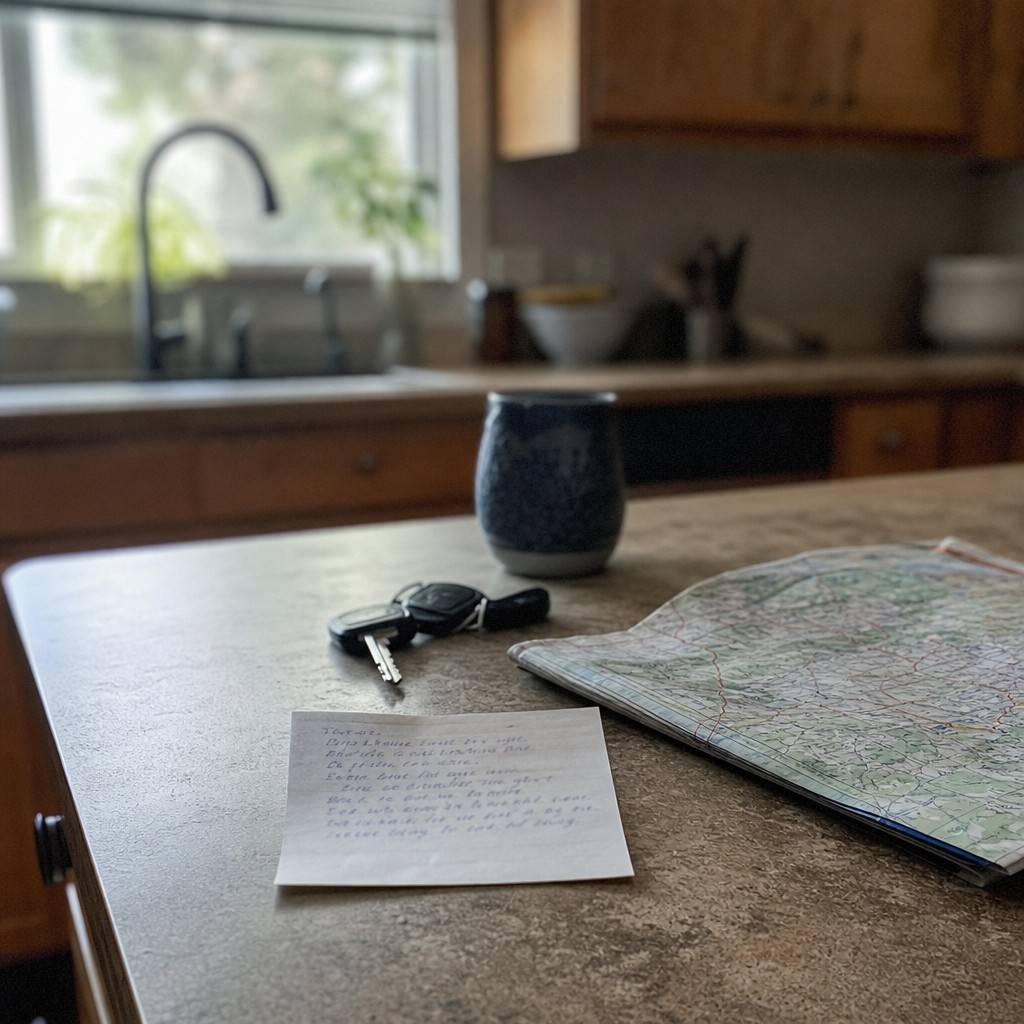
A real trip plan has five parts. Write them down, or send them in a text before you leave.
- Trail name and trailhead (the specific parking area or access point, not just the park name)
- Your intended route (a loop, an out-and-back, which fork you’ll take if there are options)
- Expected return time (when you plan to be back to your car, with a little buffer)
- Who is with you, or that you are alone
- Your car’s make, color, and license plate (search teams often start at trailheads, looking for vehicles)
That list takes two minutes to put together and covers everything a land manager needs to begin a search.
Who Should Hold the Plan
Leave it with someone who will actually notice if you don’t check in.
A neighbor who works from home is better than a family member in another time zone who goes to bed early. The person should be reachable. They should also understand the overdue protocol before you leave, not after.
One person, and they know their role. Two people holding the plan without coordinating with each other can create confusion about who is making the call.
The Check-In Pattern
Two texts, both brief.
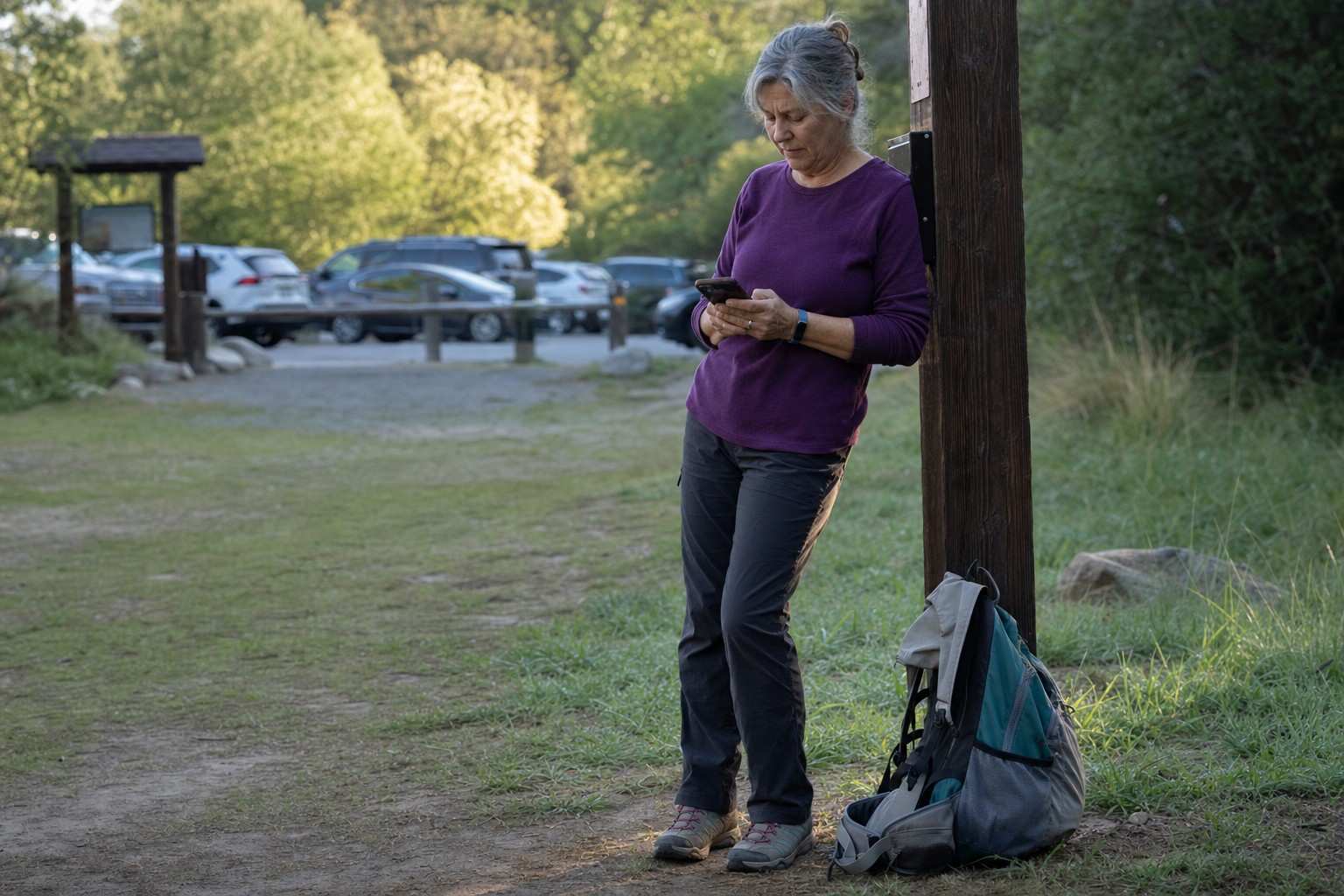
Text one: when you reach the trailhead. Something like “At the Oak Creek trailhead, starting now. Back by 3.” This confirms you made it safely to the start point. It also sets the clock.
Text two: when you’re back at the car. “Off the trail, heading home.” Done.
Cell coverage on trails is genuinely unreliable. A text sent from a ridge can queue and send twenty minutes later when you drop into a valley with a bar of service. That is normal. Your contact should know not to panic if there’s a slight delay.
A text sent from a ridge can queue and send twenty minutes later when you drop into a valley with a bar of service. That is normal.
This is also why satellite communicators like a Garmin InReach matter as your hikes get more remote. For day hikes on popular trails with occasional cell service, the two-text system is enough.
Setting a Realistic Return Time
The most common failure in trip plans is optimistic time estimates. Adults hiking for the first time, or returning after years away, often underestimate how long a trail actually takes.
Turn around at 50% energy, not when you’re tired. The return hike requires equal effort.
Build that into your time estimate from the start. If a trail takes you two hours out, plan for two hours back. Add time to rest at the turnaround point, and a buffer for slow sections on the return.
Your first hike should be 2-4 miles round trip, regardless of elevation gain.
A shorter route means a tighter, more predictable time window. That makes the plan easier to set and monitor. The guide on reading hiking trail difficulty ratings walks through the pacing math if you want honest estimates for your specific trail.
How Cell Coverage Actually Works on Trails
Many hikers assume they’ll either have service or they won’t. The reality is patchier.
You might have full bars at the trailhead, nothing for the first mile, two bars from a ridge clearing, and dead zones the rest of the way. Coverage maps are rough guides at best.
This matters for two reasons. First, your emergency texts may arrive late. Your contact needs to expect a possible gap, not a steady stream. Second, calling for help from the middle of a trail may not work even if your phone shows a signal. Texts use less bandwidth than voice calls and are more likely to connect when coverage is marginal.
According to the American Hiking Society, hikers should assume cell coverage is unavailable on any trail and treat a charged phone as a backup tool, not the primary plan. Download offline maps before you go. The guide on phone navigation and offline maps covers which apps and settings to use.
The Overdue Protocol for the Person at Home
This is the part that rarely gets written down.
If the agreed check-in time passes, here is a reasonable sequence.
Wait thirty minutes past the expected time before acting. Hikers run late for small reasons: a delayed start, slower pace, stopping to rest.
A brief wait filters out the routine delays.
At thirty minutes overdue: text and call. Leave a short voicemail. Send a text.
Wait another fifteen minutes for a response before the next step.
At forty-five minutes overdue with no response: call the land manager. For a national park, that’s the ranger station number, found by searching the park name on the NPS website.
For state parks, it’s the park office. For a local trail, it may be the county sheriff’s non-emergency line. Give them the trip plan details and follow their instructions.
If you cannot reach a land manager or the situation feels urgent: call 911. Tell them you have a missing hiker, not an emergency in progress.
They will connect you to the appropriate search and rescue coordination.
Tell them you have a missing hiker, not an emergency in progress. They will connect you to the appropriate search and rescue coordination.
According to the National Park Service, providing specific trail and vehicle information to responders significantly reduces search time. The car description and trailhead location often let rangers confirm whether someone is still on the trail before a full search begins.
The Quiet Payoff
A trip plan does something beyond the practical.
It converts a vague worry into a specific system. Your partner is not sitting at home hoping for the best.
They have a time, a place, and a set of steps to follow if needed.
That shift, from waiting-and-hoping to knowing-what-to-do, is what makes relaxed solo hiking possible. Not just for you. For everyone who cares about you.
The full picture of hiking alone safely, from trail selection to building confidence across your first ten outings, is in the solo hiking safety guide for hikers over 50. The trip plan is one piece of that system. It’s the piece you can put in place today, in five minutes, before your next hike.