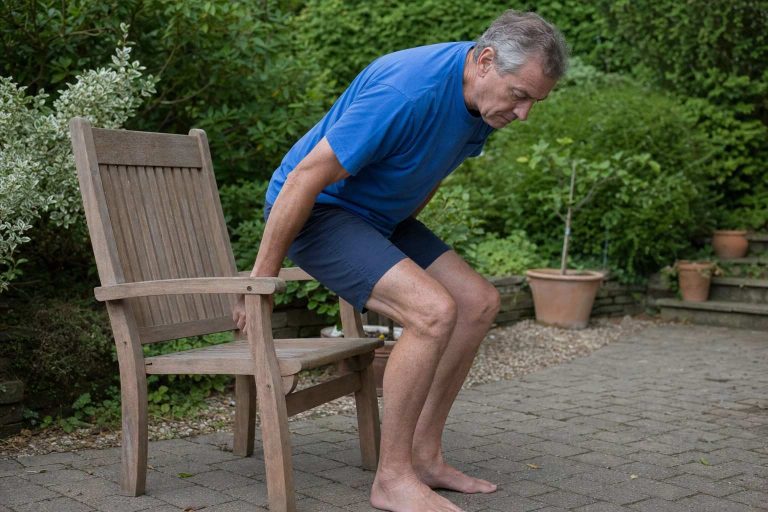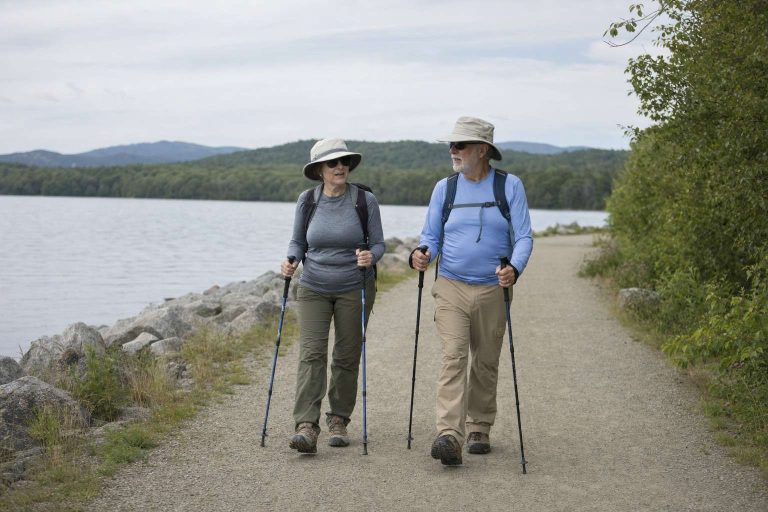

The core muscle that matters most on a hiking trail is not the one crunches train.
Crunches work a thin strip of muscle at the front of your stomach. That’s a small slice of what actually holds you steady when the ground tilts under your boot.
Hikers need something bigger. A cylinder of muscle wrapped around the whole trunk, not one strip of it.
What “core” actually means when you’re on a trail

Your core is not a six-pack. It’s a cylinder of muscle wrapping your entire midsection.
That cylinder includes the muscles running down your spine, and the ones at your sides that let your trunk twist and resist twisting.
It also includes the deep muscles under your abs that brace your middle before you even move. The muscles around your hips matter too, keeping your pelvis level with every step.
A trail rarely goes straight and flat. It tilts, it has roots and rocks, and your trunk makes small corrections constantly to keep your weight over your feet.
According to Harvard Health Publishing, your core stabilizes your body, letting you move in any direction, even on the bumpiest terrain, or stand in one spot without losing your balance.
That’s the whole job description for a hiking trail, in one sentence.
Why this matters more once you’re past 50
Trunk strength doesn’t hold steady through the decades. It declines gradually, the same way leg strength does. Most people don’t notice until a trail asks more of it than a sidewalk ever did.
A pack adds another job for that same set of muscles. Once you’re carrying weight, even a light daypack, your core is what keeps that load from pulling your posture forward or sideways with every step.
Harvard Health Publishing describes core muscles as the sturdy central link in a chain connecting your upper and lower body.
Weak muscles in that link show up as fatigue and strain somewhere else, often in the low back.
According to Harvard Health Publishing, low back pain affects four out of five Americans at some point in their lives, and well-balanced, resilient core muscles may help prevent it.
Most ankle sprains happen on descents, not climbs. Slow down going downhill.
A weak core doesn’t cause a sprained ankle by itself, but it removes a layer of defense on the way down.
The trunk stability that balance training builds is partly a core job too, catching a stumble before your ankle has to.
Five exercises that build a hiker’s core at home
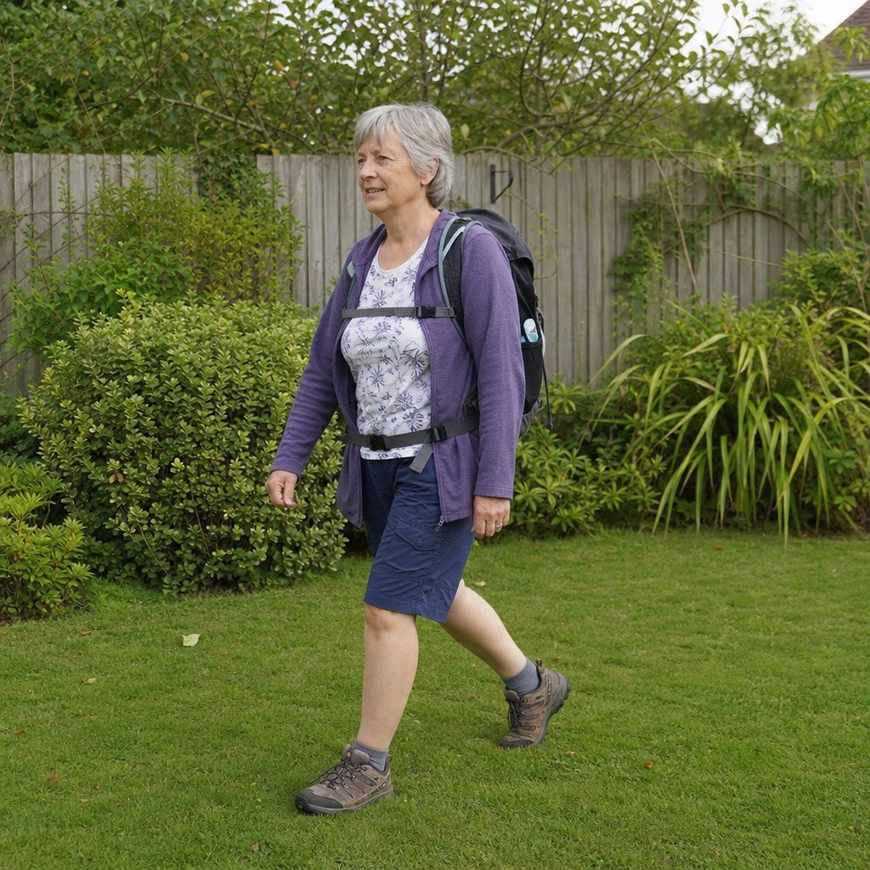
None of these need equipment beyond a mat, and one uses a daypack you already own. All five train the trunk as a whole, not isolated abs.
Two sessions a week is enough to start. Walk through each move once, at an easy pace, before adding reps.
Bird dog
From hands and knees, extend one arm forward and the opposite leg back at the same time. Keep your hips level.
Hold for two seconds, then switch sides. Start with 8 to 10 reps per side.
If a full extension feels wobbly, keep the reaching hand and knee just an inch off the floor.
Modified plank
A full plank isn’t required to get the benefit.
From your knees, or standing at counter height with your hands on the edge and your body angled back, hold your trunk straight and braced for 15 to 20 seconds.
The counter version removes almost all the load while still teaching the brace.
Glute bridge
Lie on your back with knees bent and feet flat. Lift your hips until your body forms a straight line from shoulders to knees, squeezing your glutes at the top.
Lower slowly. Aim for 10 to 12 reps.
Dead bug
Lie on your back with arms reaching toward the ceiling and knees bent at 90 degrees. Slowly lower one arm and the opposite leg toward the floor without letting your low back arch, then return.
Do 6 to 8 reps per side, keeping the range small at first.
Farmer’s carry with a loaded daypack
Fill a daypack with a modest weight, put it on, and walk 30 to 40 steps at a steady pace. Focus on standing tall rather than leaning forward.
This is the exercise that most directly mimics what your core does on the trail: bracing against a load while you move.
This is general fitness information, not medical advice.
Anyone managing an existing back condition, or recovering from a recent surgery, should check with a doctor or physical therapist first. That applies especially before the plank and dead bug.
A few minutes of guidance up front costs far less than a setback later.
Fitting this into a week that already includes hiking
Two short sessions a week is enough to make progress. This doesn’t need to be a daily habit to work.
According to the National Institute on Aging, research has shown it is important to get all three types of exercise: aerobic, muscle-strengthening, and balance. Doing one type helps improve your ability to do the others.
Core work is muscle-strengthening. It supports the aerobic work of a hike rather than competing with it for your time or energy.
Weak muscles in that link show up as fatigue and strain somewhere else, often in the low back.
Ten to fifteen minutes, twice a week, is realistic.
Pair one session with a rest day and the other with an easy day. Don’t stack both onto the same day as a long hike.
That’s also a good rhythm to run alongside the stair and hill conditioning you might already be doing between hikes.
Start with trails under 300 feet of elevation gain for your first five hikes.
A gentle trail gives a new core routine room to catch up before a steeper one asks more of it.
It’s the same logic that shapes how leg strength gets built for descents.
How you’ll notice it on the trail
The change shows up as a handful of small things, not one dramatic moment.
- Descents feel steadier, less like your torso is catching up a half step behind your feet.
- Your low back doesn’t ache by the end of a hike the way it used to.
- A loaded pack rides quieter, without the side to side sway that comes from a trunk doing all the correcting on its own.
A few minutes of guidance up front costs far less than a setback later.
These aren’t dramatic changes. They show up as one ordinary hike that felt a little easier than the one before it.
Start with two
Pick two of the five exercises above, whichever felt most awkward the first time through, and do each twice this week.
That’s the whole plan for week one. Nothing about form has to be perfect on day one, only consistent.
Once those two feel steady instead of wobbly, add a third.
The trunk that used to need a flicker of effort to catch a stumble starts doing it automatically again. That’s the point where the next hike simply feels a little easier.