Your first pair of hiking boots is one of the few gear decisions that can genuinely end a hike early.
The right boot protects your ankles, cushions your joints, and fits well enough that you forget it is on your foot. The wrong one raises a blister in the first mile.
You have already decided to buy boots. This guide helps you pick the right pair for where you are in your hiking life.
Most beginners over 50 do not need a mountaineering boot.
You need a boot that is supportive without being stiff, and waterproof without cooking your feet. It also wants a toe box roomy enough that your foot can spread naturally over uneven ground.
What Actually Matters
A few things separate a good beginner boot from a frustrating one.
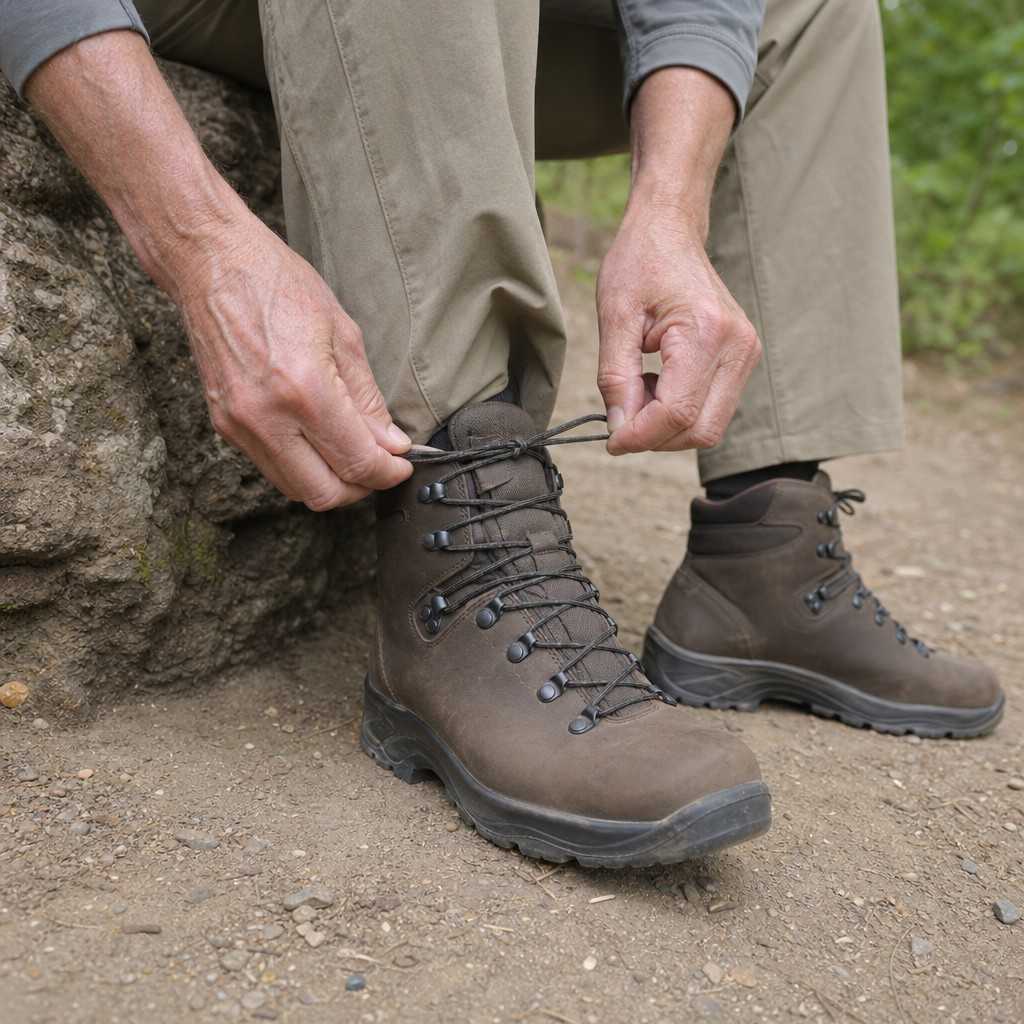
Ankle support vs weight. A taller collar slows an ankle roll on uneven ground, and on rocky or rooted trails that stability is worth the extra weight.
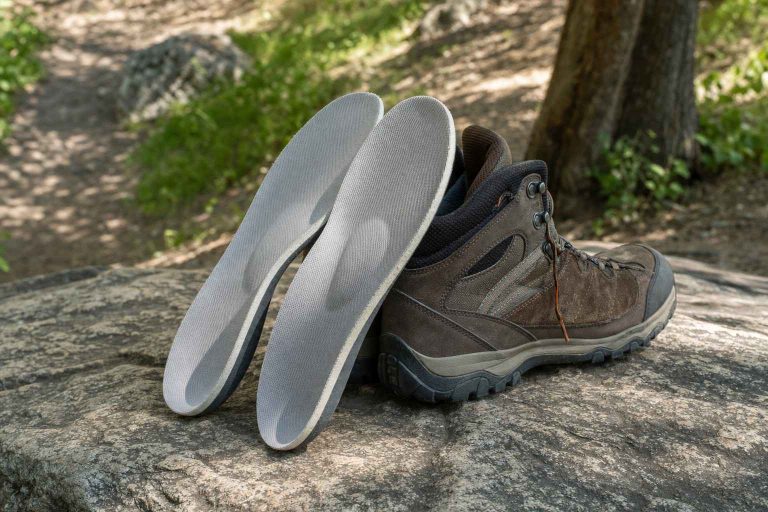
Cushioning. A well-cushioned midsole softens trail impact over a 3-mile hike, which your joints feel more as you age.
Toe box room. Feet widen with age and swell on the trail, so a cramped toe box means black toenails by mile two. Search wide-width options if your feet need them.
Waterproof vs breathable. A waterproof membrane keeps your feet dry in wet grass but traps heat on warm days. Skip it for dry summer trails, keep it for shoulder-season or shaded forest.
Break-in ease. Some boots need 20 miles before they stop punishing you, and for beginners a forgiving break-in matters more than most specs.
You can read more about breaking in hiking boots without blisters before your first long outing.
That covers the checklist. Now the picks.
Best Overall Day-Hiking Boot
Pick: a mid-height waterproof boot with a cushioned midsole and a roomy fit.
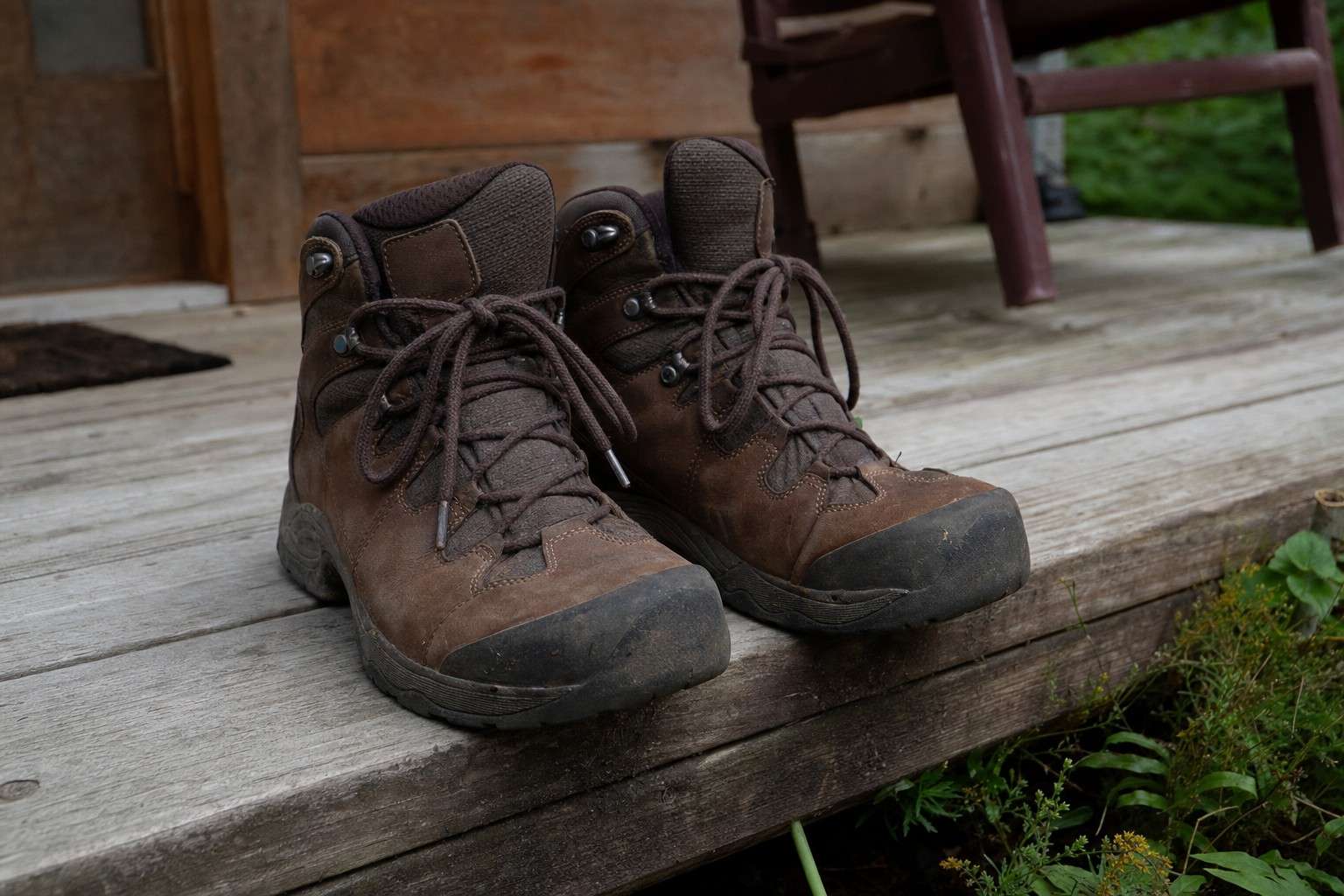
This is the right boot for most new hikers doing day trails on mixed terrain. Mid-height means the collar comes up around the ankle without going full shank.
A waterproof lining handles damp conditions without needing to think about it.
The Merrell Moab family has been the go-to recommendation in this category for years. It fits a range of foot shapes, cushions well, and breaks in faster than most boots at this price level.
The Keen Targhee is another strong option, with a wider toe box than Merrell as a default.
You can compare mid-height waterproof hiking boots and look for a cushioned midsole and a lug outsole in the description.
Best Budget Boot
Pick: a simple waterproof hiker with a rubber outsole and basic ankle collar.
You do not have to spend a lot for your first pair. A straightforward boot with a waterproof membrane, decent outsole grip, and honest fit will handle easy to moderate trails without issue.
The trade-off at lower price points is cushioning and durability. Budget boots are fine for 3-5 mile day hikes on well-maintained trails.
They show wear faster on rougher ground, and the midsoles compress sooner.
A solid waterproof hiking boot under $100 is a perfectly reasonable way to find out whether you actually enjoy hiking before spending more.
Best Lightweight Support
Pick: a low-cut boot or high-cut trail shoe with a stiff-enough sole to handle gravel and roots.
If your trails are well-graded and mostly packed dirt or gravel, you may not need the extra weight of a full mid-height boot.
A low-cut hiker with a firm midsole and a rubber lug sole gives you more energy on the return leg.
This is also the easiest category to walk out of the store wearing, since fit tends to be less fussy than a stiffer high-top. The honest question to ask yourself is whether your trails are actually flat enough for this choice.
Still working out whether boots or trail shoes make more sense for your terrain? That comparison breaks down the decision clearly.
Best Ankle Support for Rougher Trails
Pick: a full mid-height or high-top boot with a stiffer shank and deep lug outsole.
For trails with roots, loose rock, or any real descent, you want a boot with meaningful ankle support. That means a collar that sits above the anklebone and holds its shape under lateral stress, not just a fabric extension of the shoe.
The Salomon X Ultra line has a solid reputation here. It tends to fit slightly narrower than Merrell, so try both if possible.
The structured shank underfoot reduces fatigue on uneven ground, which matters more on mile 5 than mile 1.
Compare high-support hiking boots for rough terrain and look for torsional rigidity and a deep lug pattern in the product details.
Best Wide Fit and Roomy Toe Box
Pick: a boot from a brand known for wide lasts, or ordered specifically in a wide width.
This is the pick that most beginners over 50 actually need and most buying guides skip. Feet widen with age, and a standard-width boot from a narrow-last brand can cause enough pressure that no amount of breaking in fixes it.
Keen is the consistent recommendation here. Their standard last is noticeably wider than most competitors, particularly in the toe box.
HOKA also offers wider-geometry options in their hiking line, with the added benefit of very high cushioning for joint comfort.
If you have bought hiking boots before and ended up with hot spots or numbness in the toes, a wide-width hiking boot is the right place to start, not a bigger size.
Bottom Line
If you buy one boot, make it the mid-height waterproof option with a cushioned midsole. It handles the widest range of beginner trails, protects your ankles, and deals with wet conditions without extra thought.
If ankle sensitivity or foot width is your main concern, those picks shift the answer. But for most first-time hikers heading out on day trails, a supportive, well-cushioned mid-height boot is the one decision that makes every other part of the first hike easier.