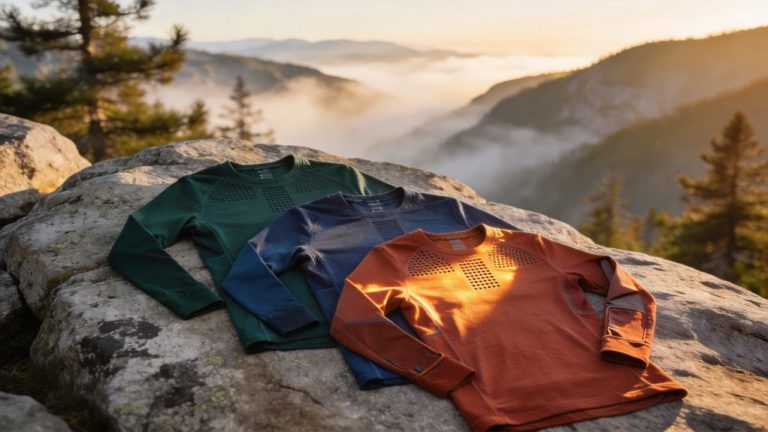
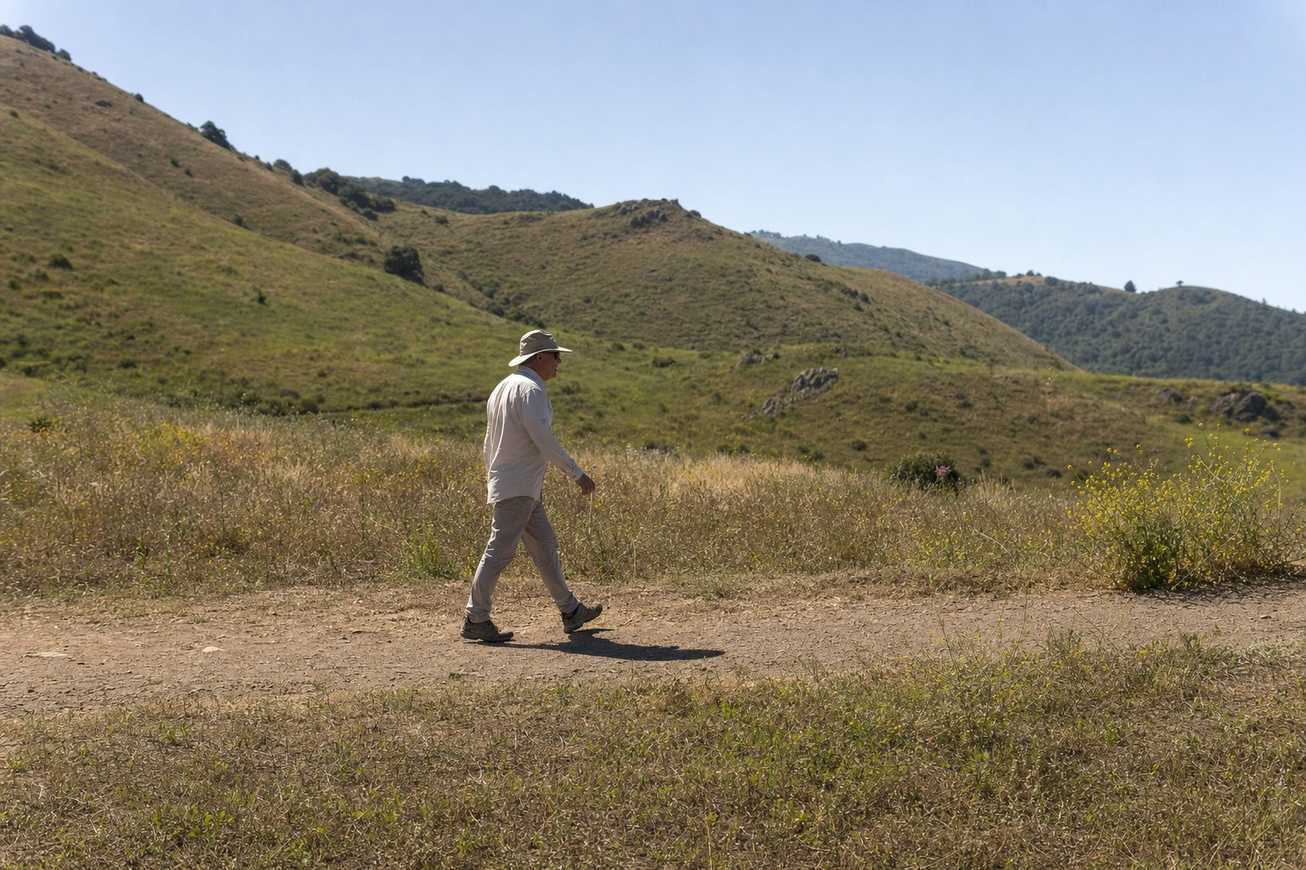
You do not need special clothing to protect your skin on most hikes.
The shirt already in your closet does more than you might think.
Gear advice for older beginners often starts by telling you to buy something. Sun protection is one place where you can usually start with what you own.
The trick is knowing the few things that quietly weaken everyday clothing. Once you can read them, you know when your wardrobe is fine and when a dedicated sun shirt earns its place.
That line is easier to read than the gear marketing suggests.
What Your Clothes Already Do
Any fabric between the sun and your skin blocks some ultraviolet light. The question is how much.
That number has a name. UPF, or Ultraviolet Protection Factor, is a lab-measured rating of how much UV passes through a fabric. It is tested by shining light through the cloth, not by exposure on skin.
According to the Skin Cancer Foundation, a UPF 50 garment blocks about 98 percent of UV rays, letting roughly 2 percent through. The same source notes that a plain white cotton t-shirt rates only around UPF 5.
So your everyday shirt is not nothing. It is also not as much as the label-bearing gear.
How big that gap is depends almost entirely on the fabric. The American Academy of Dermatology groups the rated numbers simply: UPF 30 to 49 offers very good protection, and UPF 50 or higher is excellent.
The Three Things That Quietly Cancel It
Most of the protection your clothes give comes down to three variables. Each one can shift quietly while you hike.
The first is weave and color. The American Academy of Dermatology recommends tightly woven fabrics over loose or open weaves, and notes that dark colors protect better than light ones. The CDC gives the same guidance, favoring tightly woven, long-sleeved clothing.
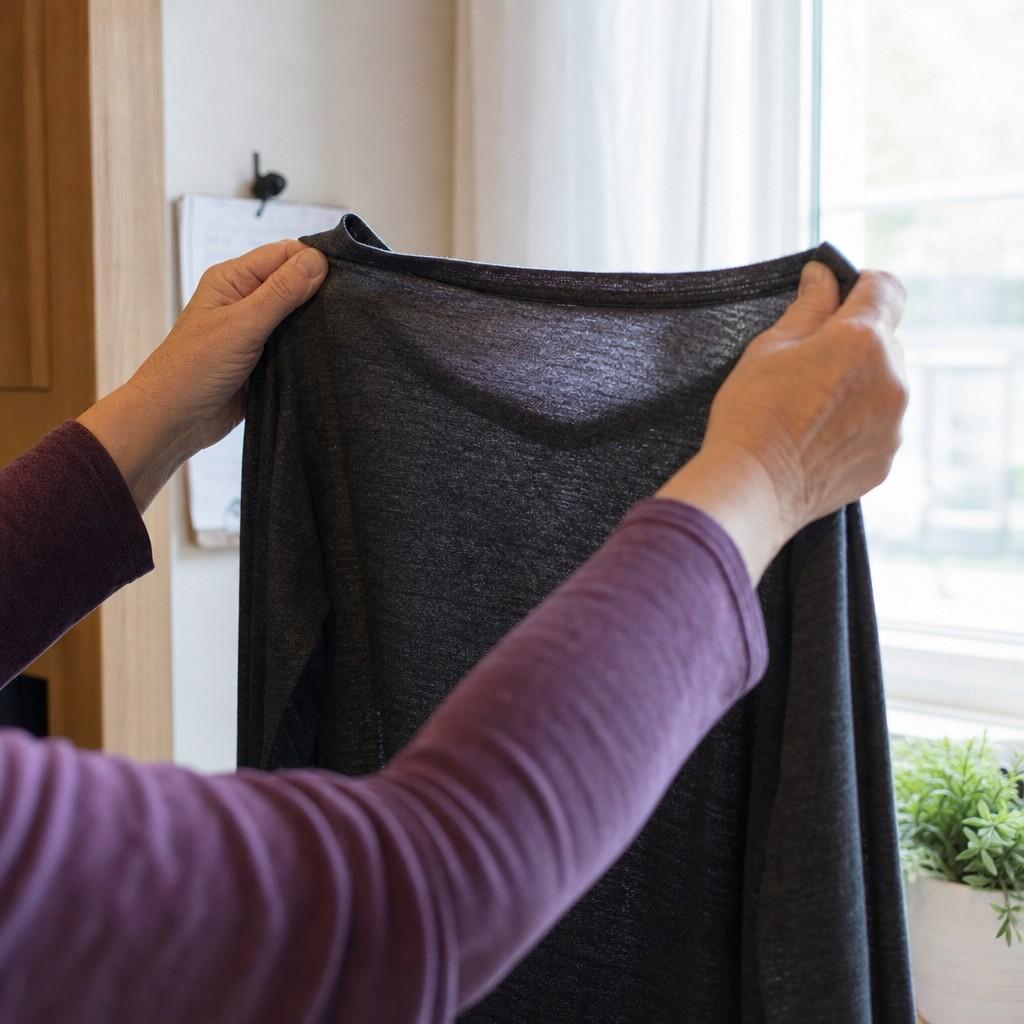
You can test the weave yourself. Hold the fabric up to a light. If you see the light clearly through it, UV gets through too.
The second is moisture. The University of Texas MD Anderson Cancer Center reports that wet fabric reduces sun protection, and Cleveland Clinic gives the same caution about ordinary cotton.
A shirt that gets wet protects less than the same shirt dry. A thin cotton tee already near UPF 5 dry can drop lower once sweat or water soaks it.
The third is stretch. When you pull a knit fabric tight, the gaps between the fibers open up, and more light slips through. A shirt stretched over the shoulders or a pack strap protects a little less right where it is taut.
| Factor | What it does to protection | What helps |
|---|---|---|
| Loose or light weave | Lets more UV through the gaps | Choose tightly woven, darker fabric |
| Wet fabric | Protection falls as the cloth soaks | Expect less near water or heavy sweat |
| Stretched fabric | Opens the fiber gaps, thins coverage | Avoid fabric pulled tight over skin |
It means the protection is real but conditional, and the conditions are easy to read once you know them.
None of this means your clothing fails you. It means the protection is real but conditional, and the conditions are easy to read once you know them.
When Your Wardrobe Is Fine, and When to Buy a Sun Shirt
A short hike on a shaded trail in cooler weather asks little of your clothes.
A dry, tightly woven, darker long-sleeve shirt is often plenty. You are not exposed for long, and the fabric stays dry.
A dedicated UPF garment earns its place when the exposure climbs.
Long, open trails with little shade are the clearest case. So is anything near water, where you sweat heavily or get splashed and your cotton loses ground.
Heat factors in too. If temperatures will exceed 85°F during your hike, reschedule. Heat safety outweighs pushing through. Those same long midday hours bring the strongest UV, so the calendar choice protects your skin as well as your core temperature.
Older skin is a fair reason to lean toward more protection.
Skin changes with the years, and sun exposure adds up over a lifetime. This is general information, not medical advice, so talk with a dermatologist about your own skin and any history of sun damage.
If you do decide to buy, look for a lightweight, tightly woven long-sleeve shirt with a UPF number on the label that stays comfortable when damp. That single garment covers the situations your everyday clothes handle worst. To see the range, you can compare long-sleeve UPF sun shirts on Amazon and match one to the trails you actually hike.
The Spots Clothing Always Misses
Even good clothing leaves gaps. Your face, ears, the back of your neck, and the backs of your hands stay exposed on most hikes.
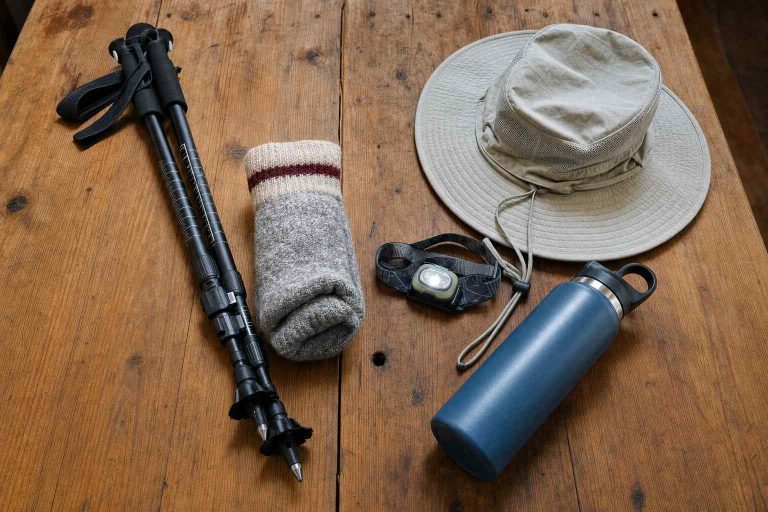
A wide-brimmed hat covers much of that, and the American Academy of Dermatology recommends one alongside protective clothing. For the skin a hat and sleeves cannot reach, dermatology groups advise broad-spectrum sunscreen.
Match the tool to the spot. Clothing for the big areas, a hat for the head and neck, sunscreen for the edges.
Clothing for the big areas, a hat for the head and neck, sunscreen for the edges.
Common Questions
Is a regular t-shirt enough sun protection for hiking? Often, for short shaded outings, especially if it is dry, dark, and tightly woven. For long exposed trails it protects less than a rated sun shirt.
Does a wet shirt still protect my skin? Less than the dry version. Both MD Anderson and Cleveland Clinic note that wet fabric lets more UV through, so plan for it near water or on sweaty climbs.
Do I need UPF clothing if I already wear sunscreen? They cover different jobs.
Clothing shields the large areas reliably and never needs reapplying, while sunscreen handles the skin your clothes leave bare.
Does the color of my shirt really matter? Yes, by the dermatology guidance. Darker, tightly woven fabrics block more UV than pale, loosely woven ones.
The Short Version
You probably already own a shirt that protects your skin well enough for an easy, shaded hike. Keep it dry, check that the weave is tight, and you are in good shape.
Save the spending for the situations that actually call for it.
Long sun-exposed miles, time near water, and skin that has earned a little extra care.