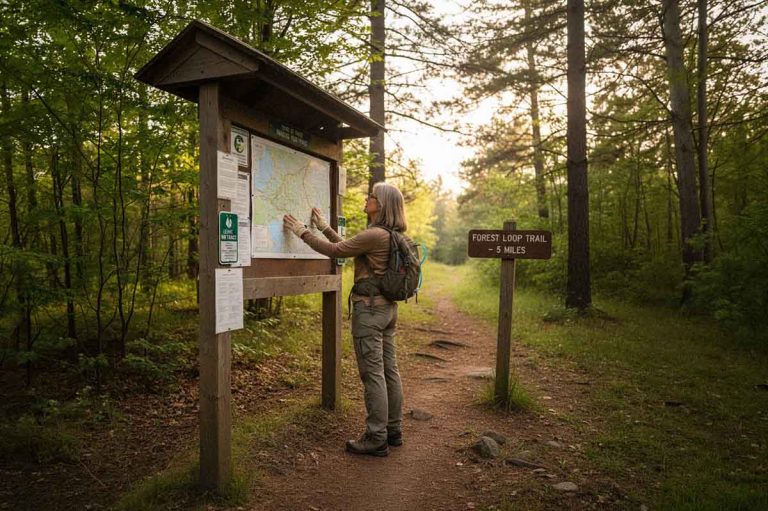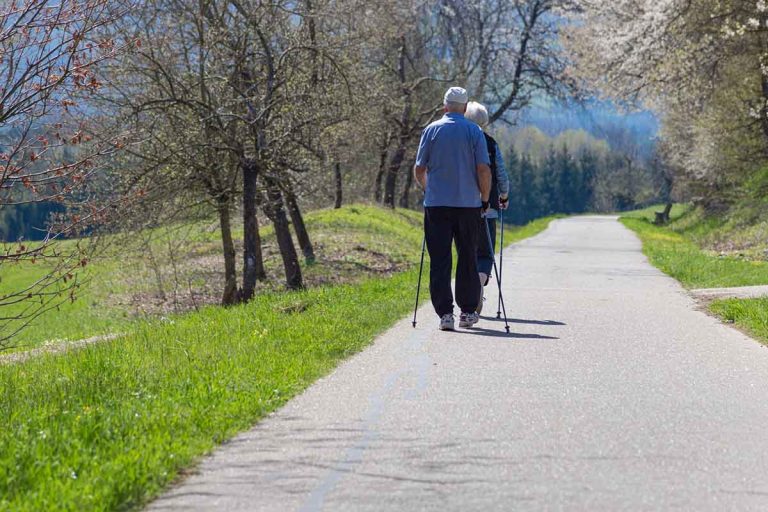
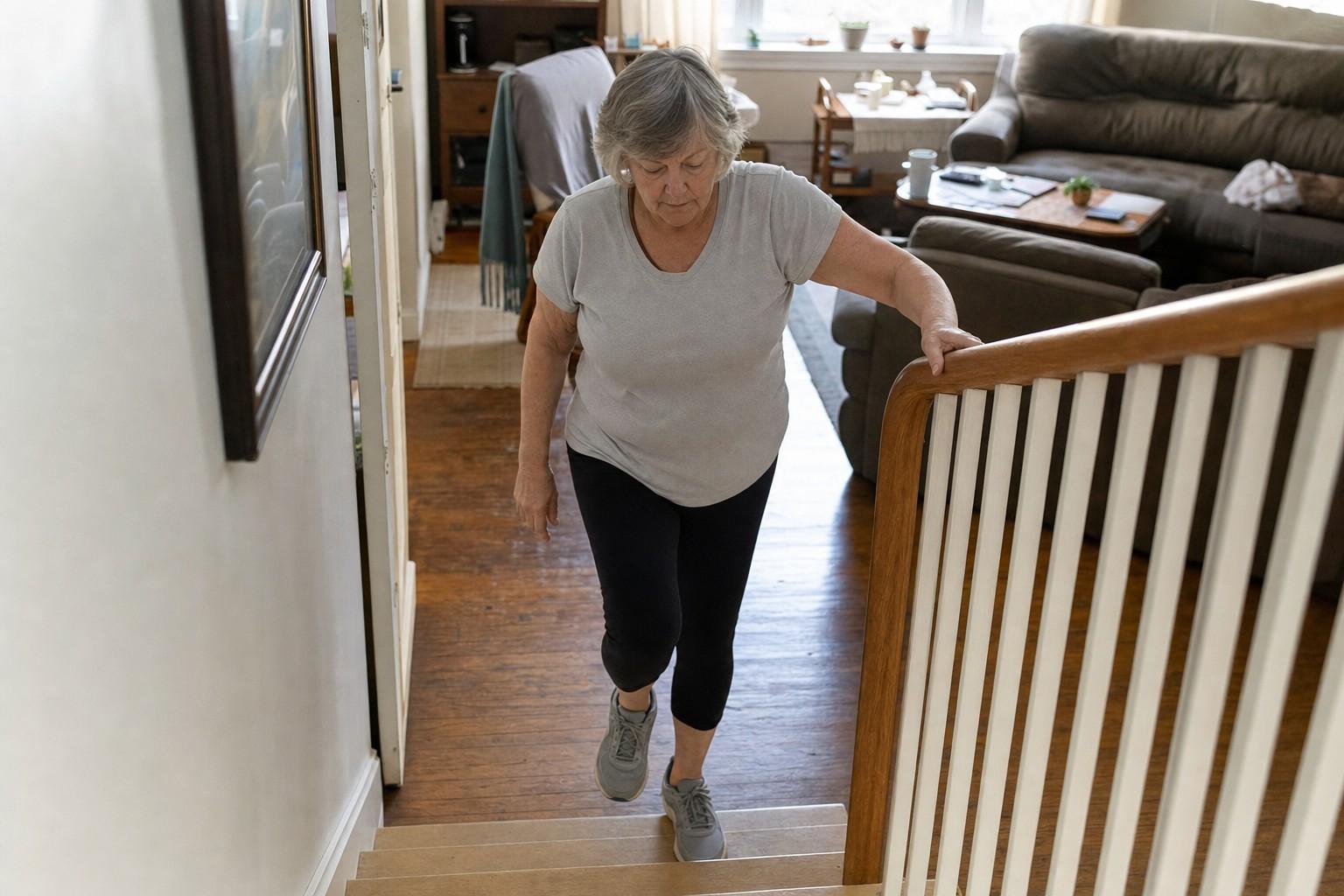
Getting fit for hiking is not the same task as getting fit at a gym. A treadmill and a set of dumbbells build general fitness.
They do little to prepare your legs for a steep downhill grade, or your shoulders for hours under a loaded pack.
Hiking asks for something more specific.
It wants legs that already know how to climb and descend, a core that holds steady on uneven ground, and shoulders that have felt real weight before the trailhead.
None of that requires a gym membership.
This is about the days between hikes, not the warm up you do right before setting out and not the hiking schedule itself. It is what happens at home, with stairs, a loaded daypack, and the hills already in your own neighborhood.
Why general fitness does not transfer to a trail
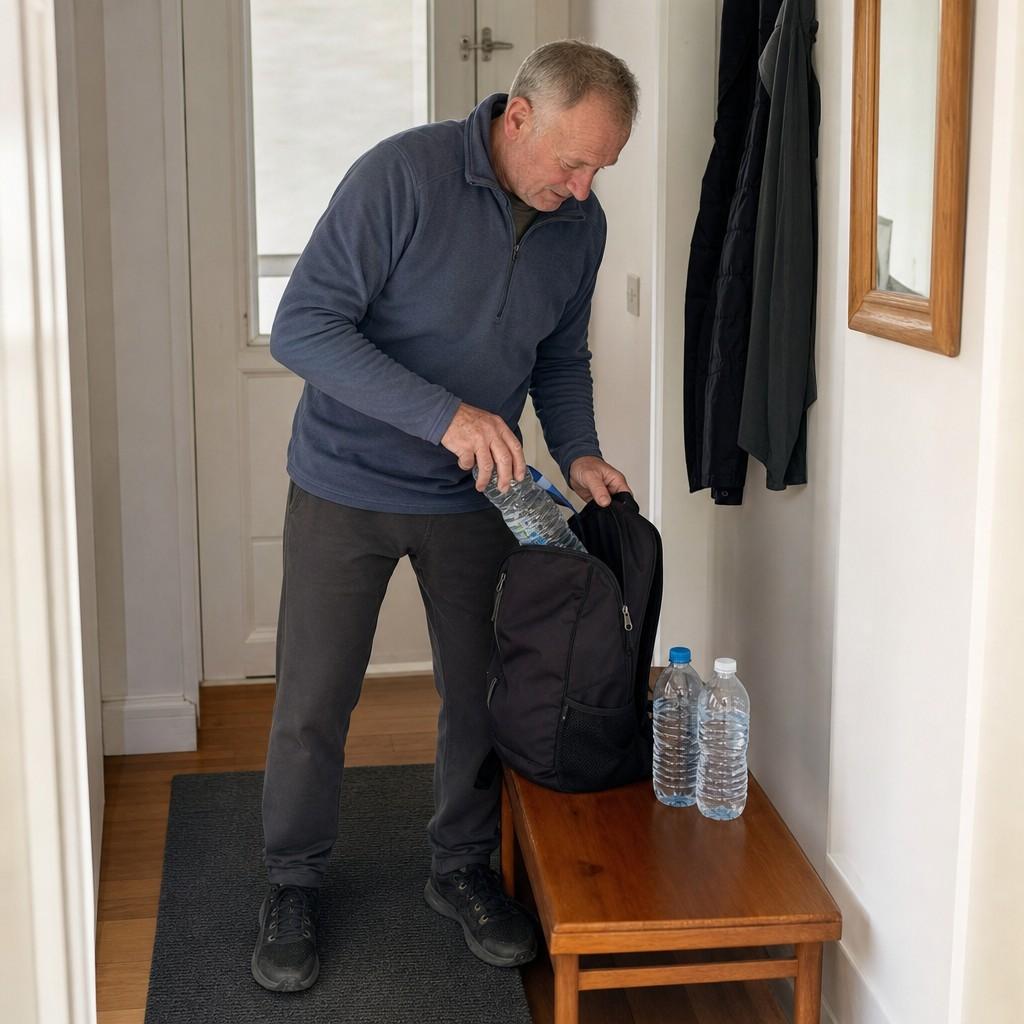
Cardio at a gym and cardio on a trail load your body differently.
A treadmill is flat and predictable. A trail rarely is.
Real hikes climb and drop, cross loose gravel, and ask your ankles to adjust with almost every step.
The National Park Service’s own hiking safety checklist asks a pointed question before you ever leave the house. It asks whether you have practiced hiking up and down steep hills, and how much weight you can comfortably carry in a backpack.
Those two questions point at exactly what generic fitness skips.
Strength built on a treadmill or a weight bench does not automatically show up on a hill. The body adapts to the specific movement it practices, not to fitness in general.
For anyone easing into starting to hike after 50 with new joints and new gear, that specificity matters even more. It is also the whole logic behind training with stairs, a loaded pack, and a real incline instead of a generic routine.
Stairs are the closest thing to a trail you already own
A stairwell, an outdoor staircase, or a steep driveway does something a treadmill cannot.
It combines climbing and descending in the same short session, the same two movements a trail elevation profile is built from.
According to Cleveland Clinic, stair climbing works the glutes, quadriceps, hamstrings, and calves. It also puts less stress on the ankles, knees, and hips than higher-impact cardio like running.
That lower joint stress matters more after 50, when connective tissue takes longer to adapt to new impact.
A simple stair session does not need to be complicated:
- Climb and descend for 8 to 10 minutes, at a pace where talking is still comfortable.
- Rest for a minute, then repeat once or twice more.
- Hold a rail on the way down if the stairs are steep or unfamiliar. Descending is the harder half on real joints.
That lower joint stress matters more after 50, when connective tissue takes longer to adapt to new impact.
A stair session runs about 8 to 10 minutes, repeated once or twice. A stairwell in an apartment building, a set of steps at a local park, or a short, steep street all do the same job.
Load your daypack before a real hike does it for you
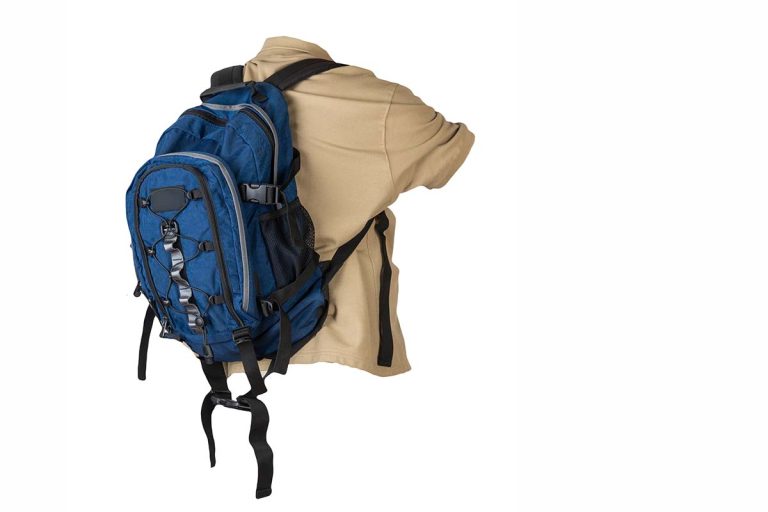
The daypack you carry on an actual hike is heavier than most people expect until they are a few miles in.
Water, layers, snacks, and a first aid kit add up fast.
Cleveland Clinic sports medicine physician Matthew Kampert recommends starting light when carrying a loaded pack. Carrying weight on your back for miles is a different demand than lifting weights at a gym, even for people who train regularly.
That gap between gym strength and pack-carrying strength is exactly why a few practice walks matter.
Two short walks work better than one big effort:
- A familiar loop with about 5 pounds in the pack, done once or twice the first week.
- A slightly longer loop with a little more weight, once your shoulders stop noticing the first one.
That gap between gym strength and pack-carrying strength is exactly why a few practice walks matter.
Add weight gradually, not all at once. Cleveland Clinic’s own guidance is to increase load or distance by roughly 10 percent a week, never both together. That way shoulders and hips adapt without strain.
By the time an actual hike calls for a full pack, your body will have already carried that weight. Just closer to home.
Hills in your own neighborhood do double duty
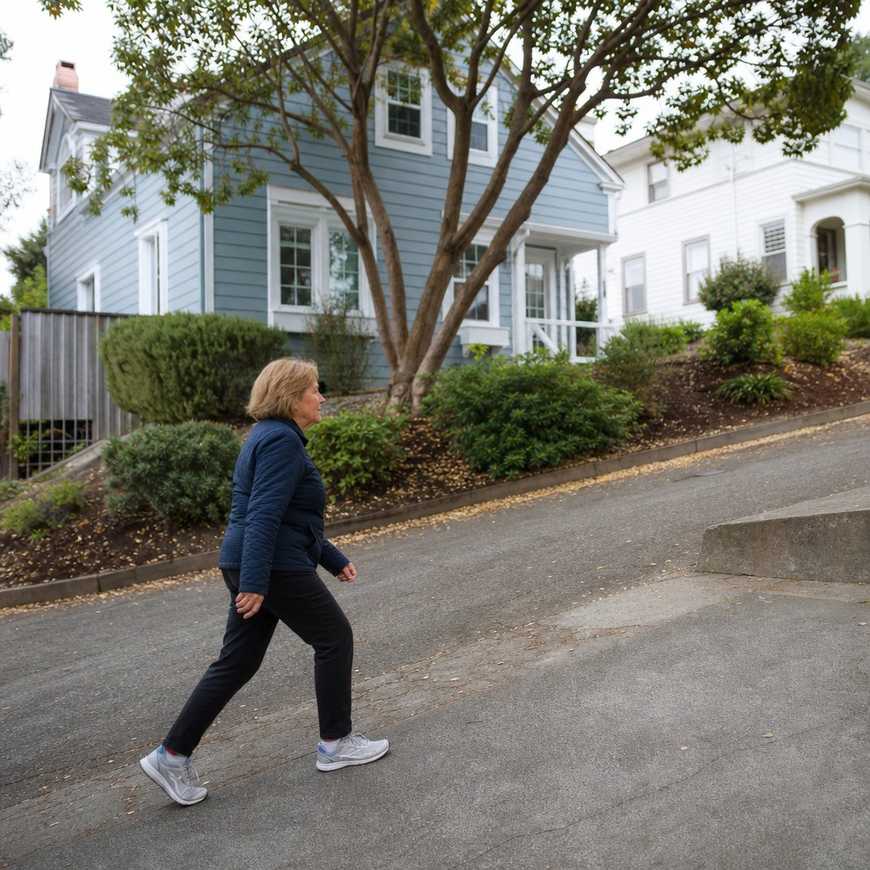
Not every neighborhood has a mountain nearby, but most have a hill, a parking garage ramp, or a stretch of sidewalk with a real incline.
Walking it, even for ten minutes, trains the same climbing muscles a trail elevation profile will ask for.
Going up works the front of the legs and the lungs.
Going down works balance and the muscles that control a slow, controlled descent, which is where many beginners feel the strain first.
Neither direction is optional practice. A real trail always has both.
Ten minutes on a genuine incline trains muscles a flat walk never touches. If your own street is flat, a parking structure or stadium ramp works the same way. So does one long flight of outdoor steps, repeated a few times.
How often, and how little is enough
This is not a daily project.
Two or three short sessions a week, on days that are not back to back, is enough to make a real difference. More than that starts to compete with recovery instead of supporting it.
Adults over 50 should allow 48-72 hours between hikes while building initial fitness. The same spacing logic applies to conditioning days. Stacking stair sessions and loaded walks with no break between them works against the rest and recovery your body needs between hikes, not toward it.
One short stair session or one loaded walk, spaced a couple of days apart, does more for a trail than a single exhausting workout. That kind of workout just leaves you too sore to walk the next day.
None of this is about training for an all-day trek, either. Your first hike should be 2-4 miles round trip, regardless of elevation gain. That is the same modest range built into a first month of hikes over 50.
None of this replaces guidance from your own doctor. That matters most if you manage a joint condition, a heart condition, or take medication that affects your heart rate or balance.
A simple week between hikes
Stack it up, and one week of conditioning can look like this:
- Day one: stairs. 8 to 10 minutes of climbing and descending, twice through.
- Day two: rest, or an easy, unloaded walk.
- Day three: loaded daypack walk. Start around 5 pounds and add weight slowly.
- Day four: rest.
- Day five: a neighborhood hill loop. Ten minutes up and down whatever incline is nearby.
- The rest of the week: rest, or a scheduled hike.
Nothing on that list needs a gym, a class, or special equipment. It needs a stairwell, a loaded pack, and a hill that was already there.