Two miles into a familiar loop, a dull ache settles low in the back and does not let up.
Or it shows up the next morning instead.
Getting out of bed feels stiffer than it used to, and standing up straight takes a beat longer than expected.
Either way, the worry underneath it is the same: that the trail is saying it is time to stop.
It usually is not.
Lower back pain around a hike is common after 50. Most of the time it responds to a handful of practical changes rather than a full stop on hiking.
Why the lower back speaks up more after 50
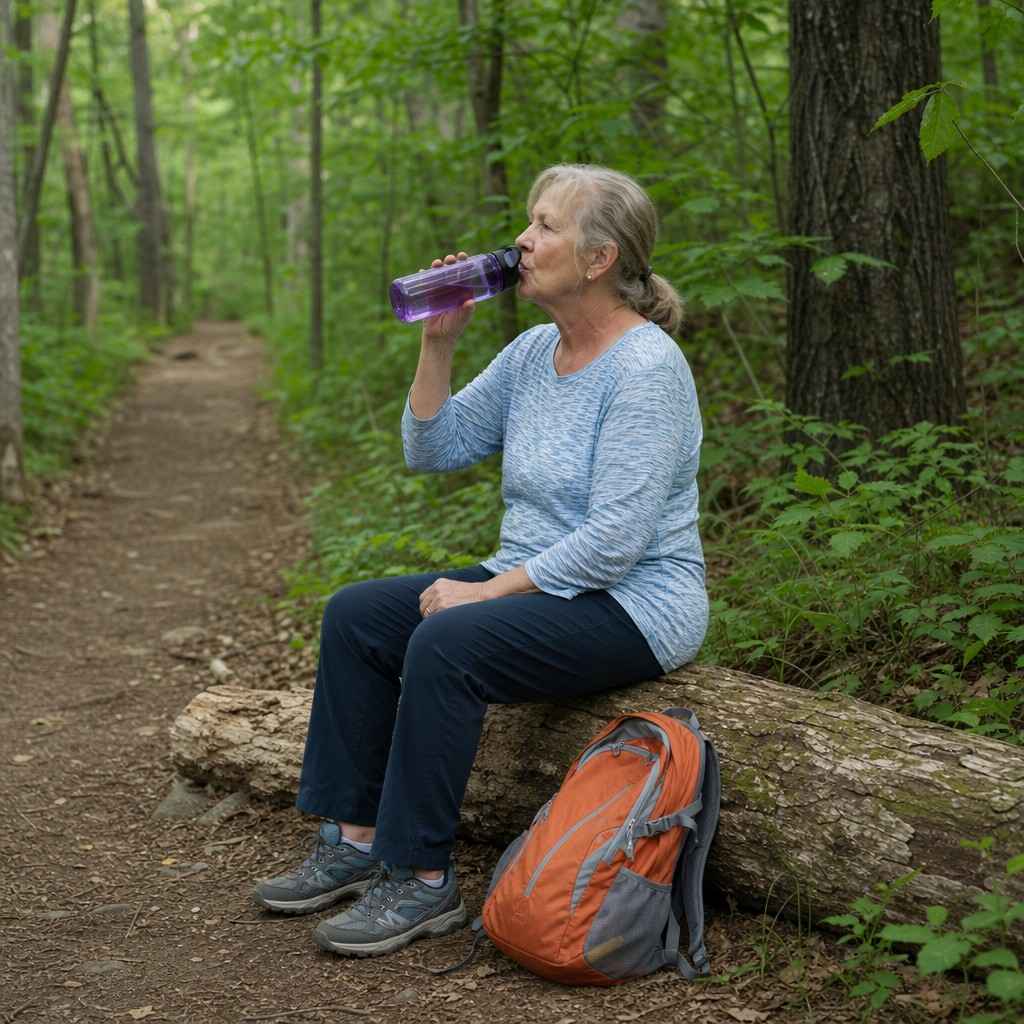
According to the National Institute of Arthritis and Musculoskeletal and Skin Diseases (NIAMS), back pain becomes more common with age, particularly after 45.
Part of that is structural.
According to Cleveland Clinic, the disks that cushion each vertebra wear away with age, a normal process rather than an injury.
Fitness plays a bigger role than age alone.
NIAMS also notes that back pain is more common among people who are not physically fit.
A body that has spent years mostly sitting will feel a steep uphill mile more sharply than one that hikes regularly.
As many as 23% of adults worldwide live with chronic lower back pain, according to Cleveland Clinic, so an aching back on the trail puts a hiker in very common company, not a rare or alarming one.
None of this means hiking is off the table.
It usually means a few specific things need to change first.
This piece focuses on the lower back itself; ankle sprains and heat exhaustion are covered separately among common hiking injuries over 50.
Pack weight and hip belt fit come first
Of everything on this list, one change moves the needle the most: how the pack sits on the body.
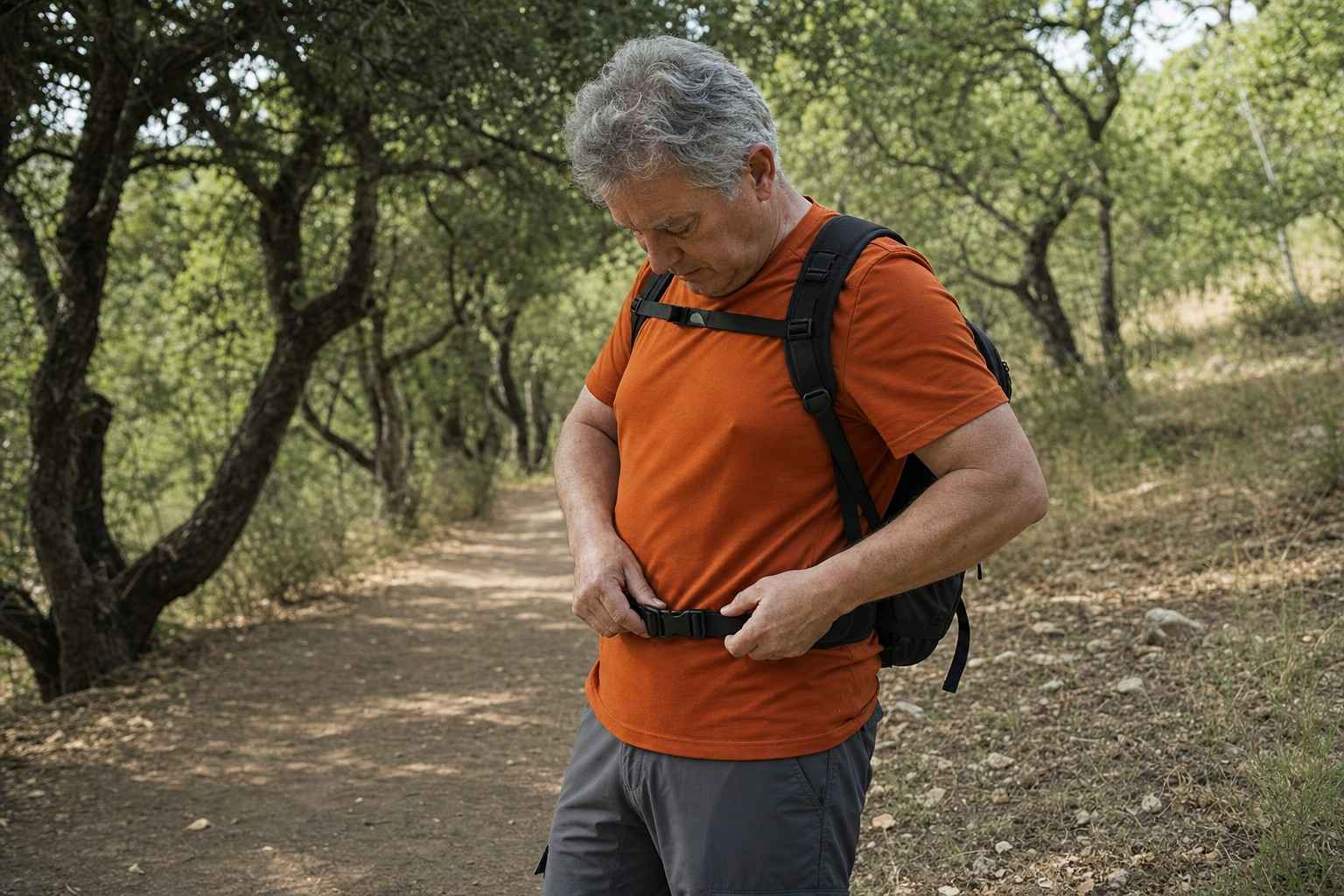
According to the American Hiking Society, tighten the hip belt first, because it sits on your hips, not above them.
A pack that hangs mostly from the shoulders drags the lower back into an unnatural curve with every step.
Over a few miles, that curved posture is where the ache tends to build.
The shoulder straps have a different job.
The American Hiking Society notes that shoulder straps do not support the weight of a backpack; they exist to keep the pack close to the body.
A hip belt tightened first can shift most of a pack’s weight off the spine and onto the hips. That is exactly where the lower back needs the help.
For hikers whose gear has not been reassessed in a while, pack fit is covered in more depth among gear adaptations for hikers over 50. Other equipment choices are worth revisiting too.
A pack that hangs mostly from the shoulders drags the lower back into an unnatural curve with every step.
Posture on climbs and descents
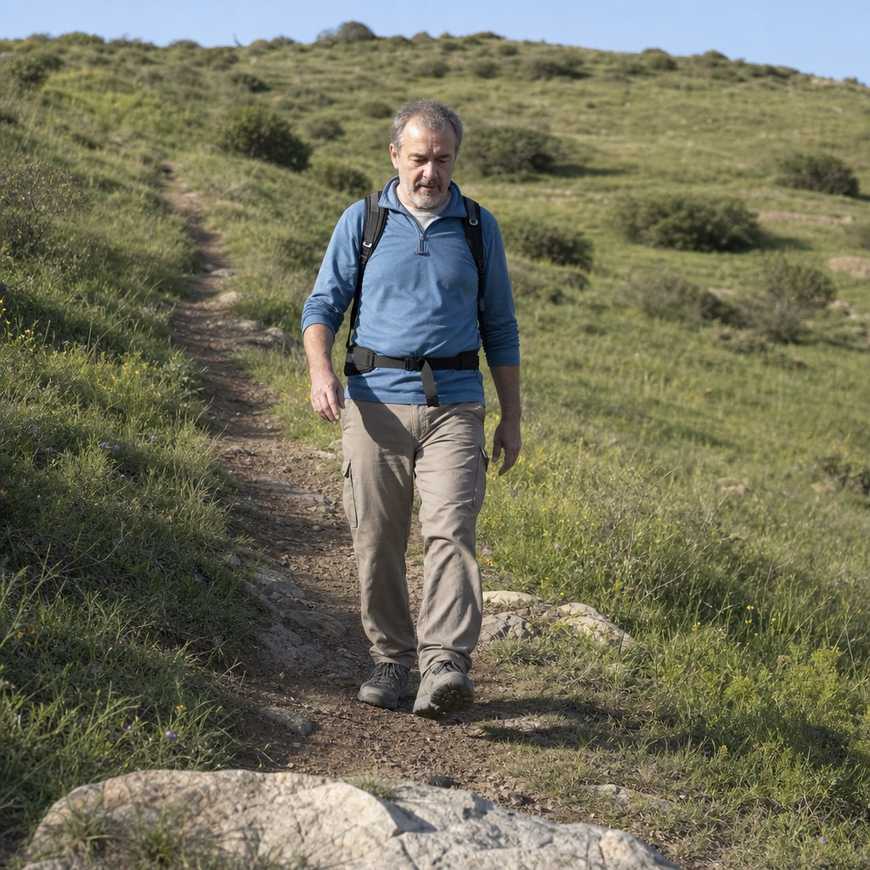
How the body is carried on hills changes the load on the lower back almost as much as the pack does.
On climbs, leaning too far forward from the waist to power up a slope rounds the lower back and adds strain with every step.
Shorter, more frequent steps keep the torso upright and let the legs do the climbing instead of the back.
Descents cause a mirror-image problem.
Leaning back to brace against gravity tightens the lower back muscles for the entire way down, rather than letting the legs absorb the impact.
Managing that starts with a controlled descent, which protects the back along with the knees.
Footwear and cushioning matter more than they seem
Every footstep sends a small shock up through the legs, hips, and lower back.
Worn-out cushioning, or shoes that were never built for the terrain, means more of that shock reaches the spine.
Firm, supportive cushioning absorbs impact before it ever reaches the lower back.
This is not a case for buying the most cushioned shoe available.
What matters is enough support to absorb the trail’s impact without adding so much bulk that footing starts to feel unstable.
Flat, worn-down soles do the opposite.
They pass more of every step’s impact straight up the leg to the spine.
Rest breaks protect the back as much as the legs
Pushing through discomfort to finish a loop is a common instinct, and it usually backfires.
Turn around at 50% energy, not when you’re tired. The return hike requires equal effort.
That principle exists mainly for the legs and lungs, but it applies just as directly to the lower back.
Fatigue changes posture, and tired posture is exactly what strains the spine.
Short breaks help more than most hikers expect.
- Sit down when possible, and take the pack off entirely rather than just loosening the straps.
- Break every 45 to 60 minutes on a longer hike, before fatigue changes how the body carries itself.
- Stretch gently at each stop instead of sitting rigidly the whole break.
A five-minute seated break with the pack off does more for the lower back than a longer standing pause with it still on.
Turn around at 50% energy, not when you’re tired. The return hike requires equal effort.
Next-morning stiffness that is normal, and stiffness that is not
Waking up stiffer than expected after a hike is common, and it does not automatically mean something went wrong.
Adults over 50 should allow 48-72 hours between hikes while building initial fitness.
That window exists because muscles, including the ones supporting the lower back, need real time to adapt.
Mild stiffness that eases within a day or two, especially with some gentle movement, usually fits that normal recovery curve.
Stiffness that improves with light movement is a good sign; pain that is sharper the next day or spreads down a leg is not.
The fuller picture on spacing hikes out and getting recovery days right lives in rest days and recovery for older hikers.
That second pattern, pain spreading rather than easing, is worth paying close attention to.
When lower back pain needs a doctor, not just rest
Most hiking-related back pain settles down with the changes above and a few days of rest.
A smaller set of symptoms points to something that needs medical attention instead:
- Pain with numbness or weakness down one leg.
- Pain accompanied by fever.
- Unexplained weight loss alongside the back pain.
- Severe pain that does not improve with rest.
According to Cleveland Clinic, those red flags, along with unexplained weight loss, warrant prompt evaluation, and clinicians recommend closer attention to new back pain at age 55 and older.
NIAMS gives the same basic guidance: see a doctor for severe pain that does not improve.
This is general information, not medical advice.
A doctor who knows a hiker’s full history is the right judge of any pain that does not fit the normal pattern above.
What to change before your next hike
None of this requires giving up hiking.
It comes down to a short list of adjustments.
- Refit the pack: hip belt tightened first, shoulder straps snug rather than load-bearing.
- Shorten the stride on both climbs and descents instead of leaning into the hill.
- Check that footwear cushioning still has real support left in it.
- Build in seated, pack-off breaks rather than pushing straight to the end.
- Give the back 48-72 hours to recover before the next hike, especially while fitness is still building.
Small changes to gear and pace solve most of this.
The lower back adapts along with the rest of the body, given the chance.