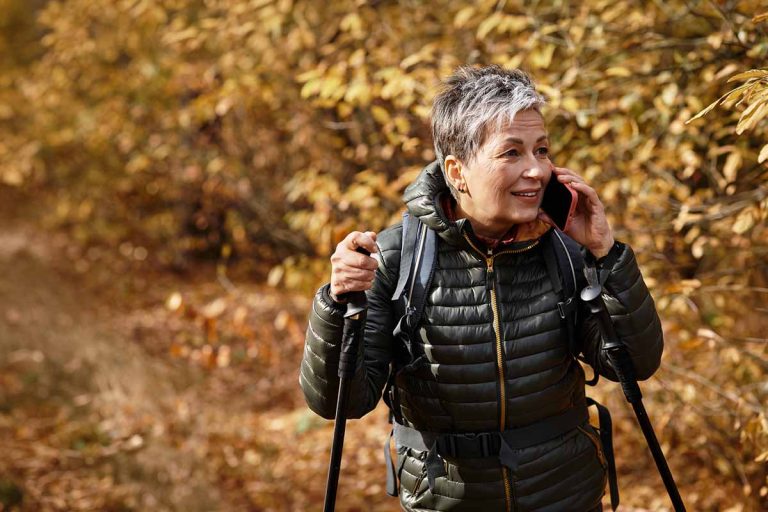

The biggest sun protection mistake older hikers make is assuming their lifelong sun tolerance still applies. Your skin has changed after age 50, and UV radiation is stronger at hiking elevations.
This guide covers 7 critical mistakes with practical solutions: coverage gaps, gear selection, timing failures, and age-specific realities.
For adults 40-70 new to hiking, this addresses your specific vulnerabilities: thinning skin, cumulative exposure, and medication interactions that increase sun sensitivity.
What You Need to Know First
The Reapplication Problem: Sunscreen wears off in 60-90 minutes from sweat and friction. Most hikers don’t reapply mid-hike. UPF clothing solves this by providing consistent protection without reapplication.
Elevation Amplifies UV: According to the Hong Kong Observatory, UV intensity increases about 10-12% for every 1,000 feet of elevation. At 3,000 feet, you face 30% more UV exposure than sea level.
Your Skin Has Changed: The Skin Cancer Foundation reports that skin thins after age 50, reducing melanin protection. Common medications like blood pressure diuretics, statins, and diabetes drugs increase sun sensitivity. What worked at age 30 doesn’t work at age 60.
Skin thins after age 50, reducing melanin protection that once absorbed UV rays.
The Critical Mistakes

Coverage Gaps
Mistake 1: Relying on sunscreen alone without UPF clothing
Why it fails: Perfect sunscreen application requires reapplication every 90 minutes. On a 3-hour hike, most people skip reapplications entirely.
What to do instead: Start with a UPF 50 long-sleeve shirt as primary protection. This covers 70% of your upper body without requiring reapplication. Add sunscreen to exposed areas (face, neck, hands). One quality UPF shirt costs $40-60 but eliminates the compliance problem completely.
Mistake 2: Missing high-risk zones
Why it fails: Ears, back of neck, tops of hands, and scalp receive intense exposure but get overlooked. These areas show disproportionately high skin cancer rates in older adults.
What to do instead: Use a coverage checklist. Ears first, then neck (front and back), hands, and scalp if balding. Wide-brim hats eliminate ears and neck from the equation. Use stick sunscreen for precise application on ears and scalp.
UV intensity increases about 10-12% for every 1,000 feet of elevation.
Mistake 3: Applying sunscreen at the trailhead
Why it fails: Sunscreen needs 20 minutes to bind to skin. Applying at the trailhead means your first 20 minutes happen with minimal protection.
What to do instead: Apply before leaving home or in the parking lot 20 minutes before starting. Reapply at the trailhead if you’ve been exposed during the drive.
Gear Selection
Mistake 4: Cotton instead of UPF-rated fabrics
Why it fails: Cotton provides minimal protection (UPF 5-10) and retains sweat. A wet cotton shirt clings to skin, reducing what little UV blocking it offered.
What to do instead: Buy one UPF 50 long-sleeve shirt in polyester or nylon. These block 98% of UV while wicking moisture. Yes, this costs $40-60. You’ll wear it every hike. After 10 hikes, cost-per-use drops below $1.
Mistake 5: Baseball caps instead of wide-brim hats
Why it fails: Baseball caps shade your face but leave ears and neck exposed. Ears show high skin cancer rates in older men specifically because of this gap.
What to do instead: Wide-brim hats (3+ inch brim) shade face, ears, and neck simultaneously. Look for UPF 50 rating with ventilation panels. Prioritize coverage over style.
Timing Failures
Mistake 6: Hiking during peak UV hours without adjusted coverage
Why it fails: At elevation, baseline UV is already 30% higher than sea level. Add peak hours (10am-2pm) and you’re combining maximum intensity with maximum duration.
What to do instead: Start hikes by 7am. Complete by 11am to avoid peak intensity. If midday hiking is unavoidable, upgrade coverage. Add arm sleeves, switch to wider-brim hat, use SPF 50 instead of SPF 30.
If temperatures will exceed 85°F during your hike, reschedule. Heat safety outweighs pushing through. For complete guidance on managing heat while hiking, see our hot weather hiking safety guide.
Age-Specific Realities
Mistake 7: Ignoring medication-induced photosensitivity
Why it fails: According to dermatology research, common medications including thiazide diuretics (hydrochlorothiazide), statins, diabetes medications, and antibiotics make skin burn faster. Your medication may have changed your sun tolerance without you realizing it.
What to do instead: Ask your pharmacist directly: “Does this medication increase sun sensitivity?” If yes, upgrade your baseline. Use SPF 50 instead of SPF 30, or add UPF sleeves on every hike. Your current medication profile determines current needs, not past sun tolerance.
Your Sun Protection Strategy
Minimum protection baseline (every hike)
Wide-brim hat (3+ inch brim). UPF 50 long-sleeve shirt. SPF 30+ sunscreen on face, neck, ears, hands. Apply 20 minutes before trailhead.
Start before 8am when possible. Check medications for photosensitivity warnings.
Drink one liter of water per two hours of hiking, on schedule not when thirsty.
Upgrade after 5+ hikes
If you burn despite baseline protection, move to SPF 50 or mineral formulas (zinc oxide). If you overheat in long sleeves, switch to lighter-weight UPF fabrics. If reapplication is difficult, add UPF pants to reduce exposed skin.
What you don’t need immediately
Complete UPF wardrobe. Big outdoor chains will tell you beginners need full sun protection systems. Reality: Start with one UPF shirt, one hat, quality sunscreen. Add based on experience, not marketing.
Expensive mineral sunscreens for your entire body. Use mineral for face, chemical SPF 30 for arms and legs.