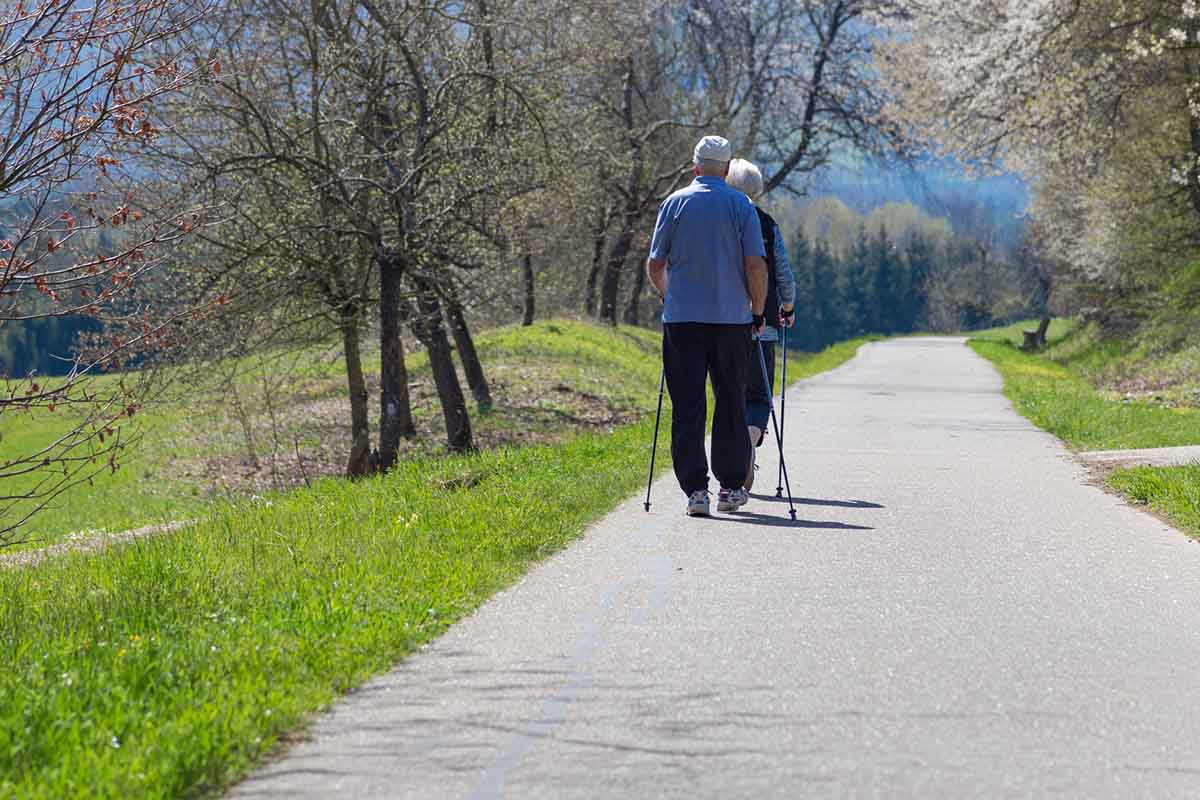
You’re not too old to start hiking at 50, 60, or even 70. Research from outdoor recreation participation studies shows adults over 50 are starting hiking in record numbers, challenging the stereotype that trails belong to younger generations.
The demographic shift is real and measurable. This guide helps you decide if hiking is realistic for you and shows exactly what your first step looks like.
Written for adults 40-70 evaluating whether to try hiking, this article draws on research from the American Hiking Society, CDC physical activity guidelines for older adults, and wilderness medicine studies.
You’ll learn what starting actually looks like at different fitness levels, what slows you down (and what doesn’t), and how to take your first hike within two weeks.
Why Starting After 50 Might Actually Be Easier
Age brings advantages younger hikers don’t have. You assess risk better and listen to warning signs rather than pushing through pain to prove something. You have financial resources for quality gear instead of cheap equipment that causes blisters.
You bring patience to the trail, willing to rest when needed.
Time flexibility matters more than fitness level. Retirees and empty nesters hike midweek when trails are less crowded, temperatures are cooler, and parking is abundant. You wait for optimal weather instead of hiking in miserable conditions.
“Your limiting factor at 55 isn’t age, it’s current fitness level. A fit 65-year-old will out-hike a sedentary 30-year-old every time.”
You’re not competing with 25-year-olds. You’re hiking for yourself, at your own pace, on your own terms.
Research from the American Hiking Society shows that mature hikers report taking more rest breaks and choosing conservative turnaround times. Behaviors that reduce injury risk.
Age-related physical changes are real but manageable. They affect how you hike, not whether you can hike. A slower pace with more rest stops still gets you to the viewpoint.
How to Know if You’re Ready to Try
Can you walk one mile on flat ground without stopping? If yes, you can start hiking easy trails.
What you don’t need:
- Peak physical fitness or athletic background
- Expensive specialized gear (water bottle and comfortable shoes are enough)
- A hiking partner (popular trails are safer for solo beginners)
- Perfect weather (mild conditions between 60-75°F work fine)
- Prior hiking experience
Most adults over 50 can start easy hiking without medical clearance. See your doctor first if you have: diagnosed heart disease, diabetes, or chronic respiratory conditions, a history of joint replacement or major orthopedic surgery, take medications affecting balance or blood pressure, haven’t exercised in 5+ years and are over 60, or experience chest pain, dizziness, or shortness of breath during normal activities.
Logistical readiness matters as much as physical readiness. Can you dedicate 3-4 hours for your first attempt, including drive time? Pick a day with favorable weather, find a trail within 30 minutes of home, and block the time.
What ‘Starting’ Actually Looks Like
Your experience depends on current fitness level. Here’s what to expect for your first 5-6 hikes.
Sedentary start (haven’t exercised regularly in years):
Your first hike: 1-2 miles on paved or packed dirt, under 200 feet elevation, 1-1.5 hours total. You’ll walk slower than expected. You’ll stop to rest. You’ll need energy. You’ll be sore the next day. Normal.
Energy management improves with experience. Proper nutrition helps maintain stamina. Our hiking snacks and nutrition guide for older beginners explains timing and portion strategies.
Start with trails under 300 feet of elevation gain for your first five hikes.
After 5-6 similar hikes over 6-8 weeks: noticeably easier, less soreness, growing confidence. Realistic 3-month milestone: 3-4 miles, 300 feet elevation gain.
Moderately active (walk regularly, some activity):
Your first hike: 3-4 miles, 200-400 feet elevation, 2-2.5 hours. Distance isn’t the challenge, uneven surfaces and elevation are. Your legs feel it more than your lungs.
After 5-6 hikes over 4-6 weeks: confident on natural surfaces, comfortable with moderate elevation. Realistic 3-month milestone: 5-6 miles, 600-800 feet elevation gain.
Active background (regular exercise, good fitness):
Your first hike: 4-5 miles, 500-700 feet elevation, 2.5-3 hours. Fitness isn’t limiting, terrain reading and pacing are new skills.
After 5-6 hikes over 2-3 weeks: confident trail selection, efficient pacing, ready for longer distances. Realistic 3-month milestone: 8-10 miles, 1,000+ feet elevation gain.
These are descriptions, not prescriptions. Start conservatively regardless of fitness background. It’s easier to add distance next time than recover from injury.
Trail difficulty ratings confuse many beginners because systems vary. Our guide to understanding hiking trail difficulty ratings explains what Easy, Moderate, and Strenuous actually mean, and why BackpackJudge uses different thresholds calibrated for adults 40-70.
The First-Hike Reality Check
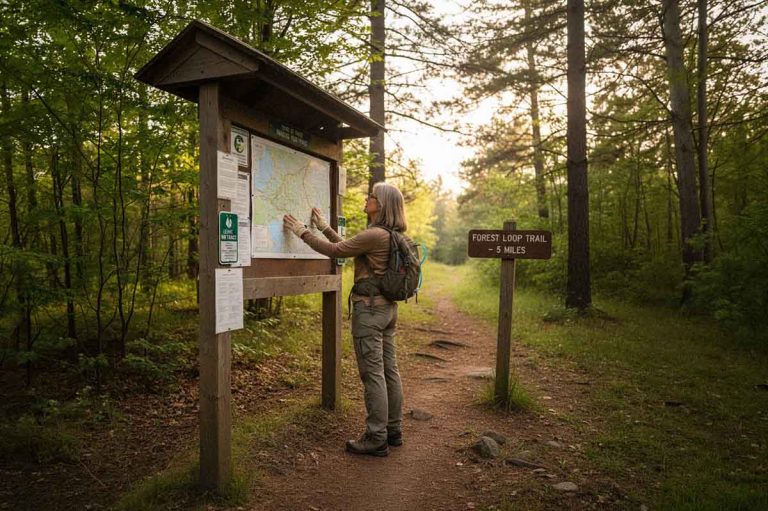
You’ll question if you’re on the right trail. Normal, signage varies.
You’ll wonder if you’re going too slow. You’re not, everyone starts slow.
You’ll stop more often than expected. Good, rest prevents injury.
You might see faster hikers pass. They’re not judging. They’re focused on their own hike.
“Your first hike should be 2-4 miles round trip, regardless of elevation gain.”
Success looks like this: finish without injury and feel willing to try again. That’s the only metric that matters. A 1-mile paved loop counts as hiking. You don’t need to summit anything.
Timeline from curious to first hike: 2-4 weeks. Week 1: research trails. Week 2-3: gather water bottle and comfortable shoes. Week 3-4: check weather, pick a day, go.
Normal first-time concerns that don’t matter: Will I look out of place? No—trails have all ages and speeds. Do I need special gear? Not yet—athletic shoes and water are enough. What if I can’t finish? Turn around anytime. No shame in shorter distance.
What Slows You Down (And What Doesn’t)
Physical changes that actually impact hiking after 50:
Reduced heat tolerance due to decreased thermoregulation efficiency. Research shows adults over 50 experience significantly reduced capacity to regulate body temperature in hot conditions. Hiking in 85°F weather at 60 feels harder than at 30. Plan for cooler morning hours.
Recovery time between exertions takes longer. Adults over 50 should allow 48-72 hours between hikes while building initial fitness, compared to 24 hours for younger hikers. This isn’t weakness, it’s biology.
Our rest days and recovery guide for older hikers covers when you can safely increase hiking frequency.
Balance adjustments on uneven surfaces require more attention. Studies on proprioception show mature adults naturally slow their pace on rocky or root-covered trails to maintain stability. This cautious approach reduces fall risk compared to rushing across unstable terrain.
Joint awareness means paying attention to surface type. Paved and packed dirt trails cause less knee strain than rocky descents.
What doesn’t limit you: Cardiovascular capacity improves at any age with training. Studies from the Journal of Applied Physiology show aerobic fitness gains in adults 60-80 match percentage improvements in younger adults. Muscle strength is trainable into your 70s and beyond. Hiking-specific fitness builds regardless of starting age.
Adults over 50 should allow 48-72 hours between hikes while building initial fitness.
Age-related changes affect how you hike (slower pace, more rest, careful surface selection), not whether you can hike.
Your First 90 Days
Months 1-2: Foundation phase
Goal: 5-8 easy hikes (2-4 miles, under 300 feet elevation). Learn what comfortable pace feels like. Test different weather conditions. Expect soreness to decrease, confidence to increase. Allow 48-72 hours between hikes.
Month 3: Decision point
Goal: 4-6 hikes at slightly longer distances or moderate elevation (not both simultaneously). See if you want to continue.
Exit ramp: if hiking isn’t enjoyable after 10-12 attempts, that’s useful information. Not everything needs to become a lifelong hobby.
If you continue beyond 90 days: gradually increase distance or elevation, never both at once. Add one mile or 200 feet elevation, not both. This progressive approach builds fitness without overwhelming your body.
Understanding common injuries helps you avoid them. Our guide to hiking injuries over 50 and prevention strategies covers the most frequent issues and specific adaptations that reduce risk without limiting your hiking goals.
Taking Your First Step
Your next step: pick an easy trail within 30 minutes of home. Check weather for a day with temperatures between 60-75°F and no rain. Block 3-4 hours on your calendar this week or next.
Go.
What to bring: water (1 liter minimum), salty snacks, phone, comfortable athletic shoes. That’s enough. You don’t need specialized boots, trekking poles, or expensive gear to see if you enjoy hiking.
The hardest part is deciding to try. After that, it’s just one foot in front of the other. Start with trails under 300 feet elevation gain. Walk at a pace where you can hold a conversation. Stop to rest whenever you want. Turn around at any point.
Most adults who try hiking after 50 wish they’d started sooner. The only way to know if hiking works for you is to try a short, easy trail and see what happens.
Read more about hiking through menopause.
Medical Disclaimer: This site provides general hiking information, not medical advice. Consult your healthcare provider before starting any new physical activity, especially if you have existing health conditions, are over 50, or have been sedentary.
About BackpackJudge: BackpackJudge creates beginner hiking content for adults 40-70, prioritizing stable surfaces, accessible facilities, and realistic expectations for mature beginners. Information compiled from parks data, outdoor recreation resources, and hiking safety guidelines. Conditions and recommendations may change. Always verify current information from official sources before making decisions.