Seven gear categories require different choices after 50 than standard beginner recommendations suggest. This guide covers footwear, trekking poles, backpacks, hydration, sun protection, layering, and recovery tools where physiological changes demand specific adaptations.
If you’re new to hiking, start with our Essential Hiking Gear for Beginners: Complete Checklist. We focus here on adaptations based on joint mechanics research, thermoregulation data, and recovery physiology.
These aren’t concessions to age. They’re strategic choices matching real changes in ankle flexibility, grip strength, and heat tolerance.
Footwear: The Ankle Support Trade-Off
Your ankles have lost flexibility since your 30s. Research shows that adults over 50 experience reduced ankle proprioception, making unstable surfaces riskier.
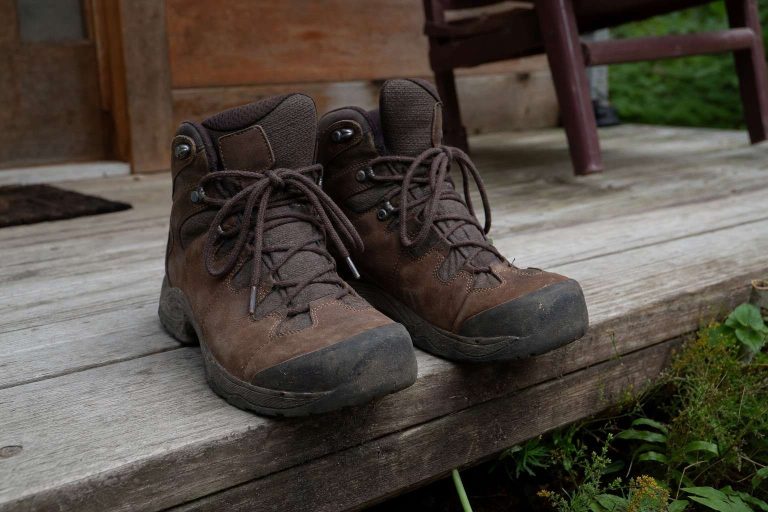
Mid-height boots provide lateral ankle support that compensates for this decline.
For stable trails, low-cut shoes work fine. For dirt trails with roots or rocks, mid-height boots reduce ankle roll risk significantly.
Focus on forefoot cushioning. Fat pad thinning means less natural shock absorption. Look for substantial midsole cushioning and wider toe boxes.
Quality trail footwear for mature hikers typically ranges $100-180, with specialized models reaching $250. Budget options under $80 often lack the cushioning and support that matter most after 50.
Footwear Adaptations That Actually Matter
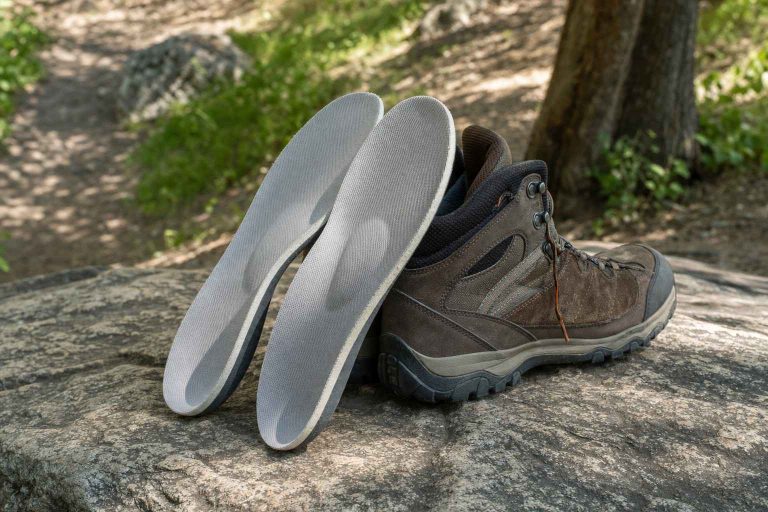
Insole replacement. Factory insoles provide insufficient cushioning for mature joints. Replace them with supportive aftermarket insoles.
Beyond insoles, the entire boots-vs-shoes decision changes after 50 due to proprioception loss and break-in realities. Your skin is less elastic, making boot break-in more painful and time-consuming. Our boots vs trail shoes guide explains when each option works based on age-specific biomechanics.
Trekking Poles: Grip Ergonomics Matter More
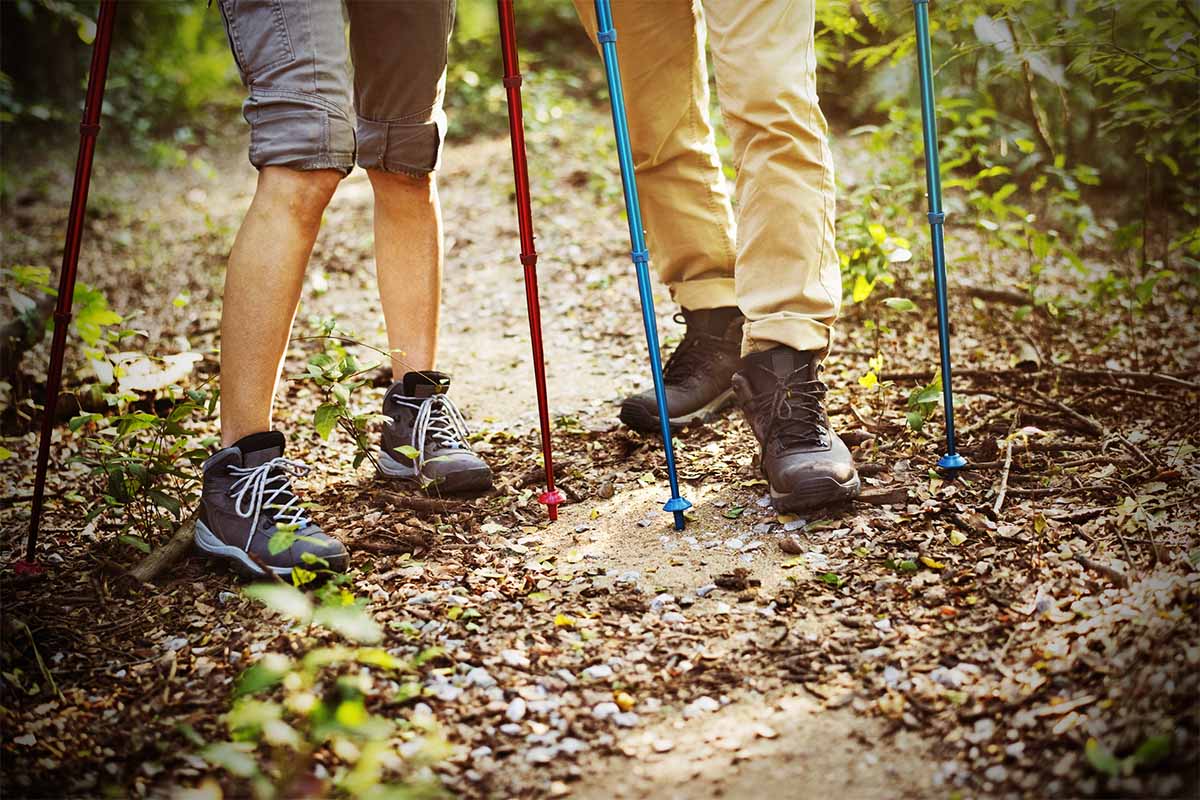
Research shows poles reduce knee impact by 25% for adults over 50.
Cork grips absorb hand moisture while reducing arthritis pressure points. Foam grips slip when hands sweat and create pressure hotspots. Ergonomic grips distribute pressure across your palm instead of concentrating it.
Shock absorption adds 2-4 ounces per pole but reduces wrist and elbow joint stress. Worth the weight for managing inflammation.
“Most ankle sprains happen on descents, not climbs. Slow down going downhill.”
Quality poles with ergonomic features for mature hikers typically range $60-120, with premium shock-absorption models reaching $120-180.
Backpack Fit: Your Torso Has Shortened
Spinal compression over decades means your torso is likely 1-2 inches shorter than at age 30.
Remeasure your torso length before buying a new pack. Most retailers offer free fitting. Proper hipbelt positioning shifts downward as your torso shortens.
Reduced core strength means poor weight distribution causes more strain. Prioritize lighter base weight. A fitted 28L pack carrying 12 pounds beats a 35L pack carrying 18 pounds.
Properly fitted daypacks for mature hikers typically range $80-180, with premium models reaching $300.
Load distribution becomes critical after 50 when shoulder strength declines. A properly fitted backpack with hip belt transfers 70-80% of weight from shoulders to hips, reducing strain on rotator cuffs and neck muscles.
Hydration Systems: Slower Pace Requires More Capacity
Your thirst response diminishes after 50.
Drink one liter of water per two hours of hiking, on schedule not when thirsty. Slower hiking pace means more time on trail, requiring more water.
Carry 3L bladder capacity instead of 2L. According to the Wilderness Medicine Society, proper hydration reduces heat-related incidents by 60%.
“Drink one liter of water per two hours of hiking, on schedule not when thirsty.”
Look for wide-mouth bottles with loop caps instead of screw tops for easier opening.
Hydration bladders for mature hikers typically range $30-50 for quality models. Wide-mouth bottles with easy-grip caps run $10-25.
Sun Protection: Cumulative Damage and Medication Sensitivity
Thinner skin tears more easily on sun-exposed arms.
UPF 50 rating minimum, not just any long sleeves. Regular cotton shirts provide UPF 5-7. Dedicated sun shirts provide UPF 50, blocking 98% of UV. Wider-brimmed hats protect ears and neck.
Many blood pressure and cholesterol medications increase sun sensitivity significantly.
Mineral sunscreen works better for sensitive skin. Reapply every 90 minutes.
Quality UPF 50 shirts for mature hikers typically range $40-80, sun hats $20-50. Mineral sunscreen runs $12-20 for trail-size containers.
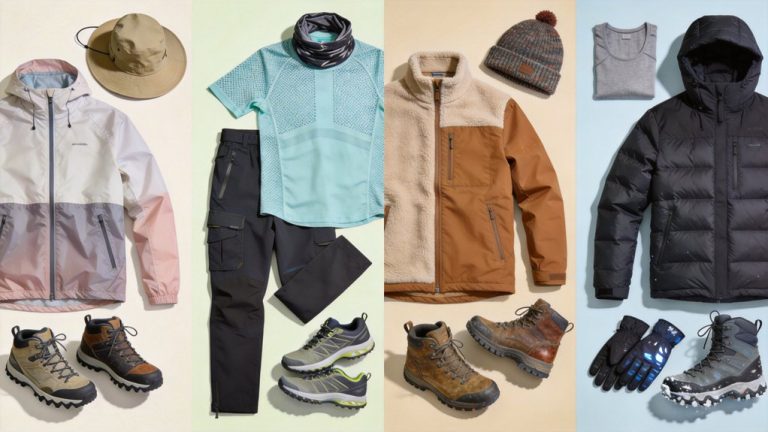
Layering: Thermoregulation Efficiency Declines
Your body regulates temperature less efficiently after 50.
Pack an extra mid-layer even when younger hikers wouldn’t. A 65°F morning feels fine while moving but drops to uncomfortable within minutes of stopping.
Choose lighter puffy jackets using synthetic insulation instead of down. Synthetic weighs slightly more but dries faster and maintains warmth when damp.
Mid-layers for mature hikers typically range $40-120 per piece, insulating jackets $80-200.
“Adults over 50 should allow 48-72 hours between hikes while building initial fitness.”
Recovery Aids
Recovery takes longer after 50.
Portable foam rollers and resistance bands enable pre-hike warmup routines. Five minutes of rolling and activation before starting prevents injury better than stretching alone.
Compression sleeves for knees reduce inflammation after descents. The compression improves blood flow and reduces joint swelling.
Recovery tools for mature hikers typically range $15-30 for compression sleeves per pair, $15-25 for portable foam rollers, and $10-20 for resistance band sets.
Common Gear Adaptation Mistakes
Over-engineering creates problems.
Ultra-stiff boots cause foot fatigue. Maximum-cushion shoes reduce ground feel. Start with mid-level adaptations and adjust.
Under-adapting leads to preventable injuries. Your 30-year-old trail runners lack the support your current ankles need.
Price doesn’t equal age-appropriate. Focus on features addressing specific physiological changes, not price tags.
Gear adaptations address age-related changes, but realistic expectations matter equally. Our starting hiking after 50 guide covers these expectations.
Strategic Buying Approach
Adapt footwear first.
Poor boots cascade into knee pain, ankle rolls, and shortened seasons. Trekking poles come second for immediate joint stress impact.
Backpack fit and hydration systems come third. Test borrowed gear before buying.
Layering and sun protection adapt gradually. Buy one quality piece and test it.
Take advantage return policies. Adaptations should solve actual problems, not theoretical concerns.
The Adaptation Advantage
These adaptations match your current physiology.
A 55-year-old with adapted gear hikes more comfortably than a 55-year-old using equipment designed for 25-year-old bodies.
You can afford quality boots and research before buying. Use those advantages.
Gear adaptations reduce injury risk when chosen strategically. Our common hiking injuries over 50 guide explains which injuries gear can actually prevent versus which require technique changes, helping you invest in adaptations that matter.