Walk into any outdoor store and you’ll face 2,000 products. The industry wants you to believe you need all of them. You don’t.
For your first few walks, you need what’s probably already in your kitchen: water bottle, sunscreen, snacks. That’s enough to start.
This guide covers three stages: 1) your first walks on easy paved paths, 2) moving to dirt trails in parks, and 3) the complete gear list for regular trail hiking. Build gradually, not all at once.
Who this is for: Adults 40-70 testing if they enjoy outdoor walking and hiking. Not experienced backpackers. People who want to try coastal paths, park loops, and accessible trails without buying a specialty wardrobe first.
How we built this list: Based on the “10 Essentials” framework from the American Hiking Society, adapted for mature beginners. We start with absolute basics for paved paths, then add items as terrain and distance increase. Most beginners over-buy. This guide prevents that.
Your First Few Walks: What You Already Own
Most people start with easy walks on paved paths: coastal routes, park loops, accessible trails. Smart approach.
You’re testing if you enjoy it.
For your first few walks, bring:
- Water bottle
- Sunscreen and hat (if sunny)
- Snack (if you’ll be out more than an hour)
That’s it.
These urban paths have maintained bathrooms with running water. Use them before you start.
If you enjoy these walks and want to try dirt trails, your gear needs expand slightly. Start here first.
Moving to Dirt Trails: The Safety Additions
After a few easy paved walks, you might want to try dirt trails: paths in parks, nature areas, or hills.
What changes: You’re farther from facilities. Trails can be confusing because junctions aren’t always marked clearly. Weather affects you more.
“Research from the American Hiking Society shows that being prepared with basic safety items reduces hiking emergencies by over 70%.”
Add these items:
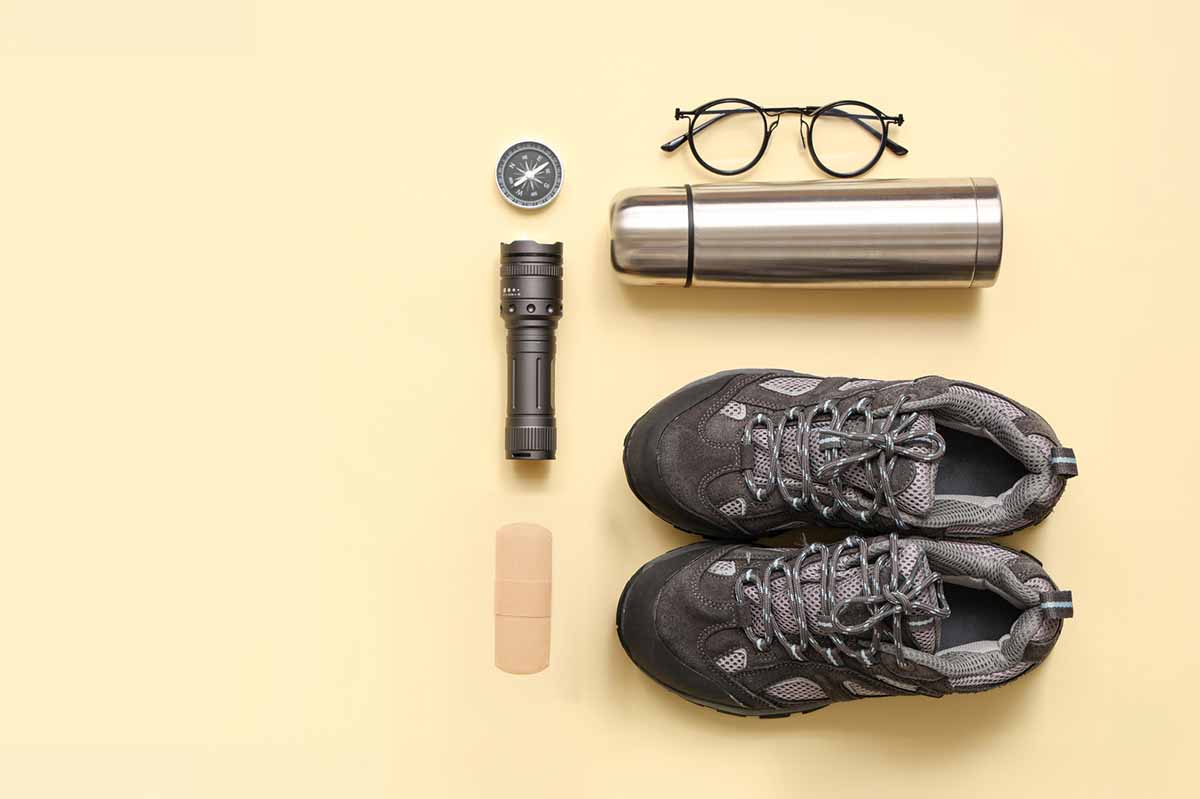
- First aid basics: Bandaids, blister treatment, personal medications ($10-20)
- Trail map or phone with offline maps: AllTrails or Gaia GPS ($0 if you own phone)
- Light jacket: Temperatures drop in shade ($20-40)
- Headlamp: In case you’re out longer than planned ($15-25)
- Space blanket: Emergency warmth layer ($5)
- Tissues and hand sanitizer: For trail restrooms ($5)
Why these matter: They cover realistic “what if” scenarios. Minor injuries, getting turned around, weather changes, taking longer than planned.
Bathroom reality: Trail facilities are pit toilets at trailheads. No running water, toilet paper may be out. This matters more after age 50 when medications and hormonal changes increase bathroom urgency.
Cost: These additions total $30-50 if buying new.
“Most beginners over-buy based on anticipated needs rather than actual experience.”
Trail shoes consideration: After 10+ hikes on dirt trails, you’ll notice athletic shoes slip on loose surfaces. That’s when trail runners matter.
Not before.
The Complete Essentials: What Regular Hikers Carry
This covers what experienced day hikers carry. Build toward this list gradually.
Water & Hydration
How much: Plan for 24–34 oz (0.75-1 liter) for 2+ hour hikes. For easy beginner trails, sip water every 15-20 minutes. Adjust up in heat.
Options: Reusable bottle you own (free), basic water bottle, or hydration vest.
Age consideration: Thirst response diminishes after 50, raising dehydration risks until deficits are significant (Wilderness Medicine Society). Drink on schedule.
Food & Snacks
What: Calorie-dense items like nuts, dried fruit, energy bars, or sandwiches.
Why calorie-dense matters: Your body burns 300-400 calories per hour of hiking. Blood sugar drops cause poor judgment and fatigue. Simple carbs provide quick energy, fats and proteins sustain you longer.
What you eat on the trail affects your energy as much as how much water you drink. See our hiking snacks and nutrition guide for more details.
Cost: $5-10 from grocery store.
Navigation
What: Phone with offline maps (AllTrails or Gaia GPS) OR printed trail map.
How offline maps work: Open your maps app, find your trail, download the map while you have cell signal. The downloaded map stays on your phone and works without cell service. Takes 2 minutes.
Even popular trails have confusing junctions. Getting turned around adds hours and stress.
Cost: Free if you own phone, or $5 for printed map.
“Start with trails under 300 feet of elevation gain for your first five hikes.”
Sun Protection
What: Sunscreen SPF 30+, hat with brim, sunglasses.
Why it matters more with age: According to the American Academy of Dermatology, skin becomes more UV-sensitive after 50 due to thinning and cumulative sun damage. Elevation increases UV intensity by 8-10% per 1,000 feet.
Cost: $15-30 total.
Sun protection goes beyond sunscreen. A wide-brimmed hat designed for hiking provides better coverage than a baseball cap, especially for those concerned about skin cancer risk.
First Aid
What: Bandaids, blister treatment (moleskin or blister pads), personal medications, pain reliever. You can these with a small pre-made kit.
Blisters end hikes.
They start as hot spots and become open wounds within 30 minutes if not treated. Catching them early means continuing your hike comfortably.
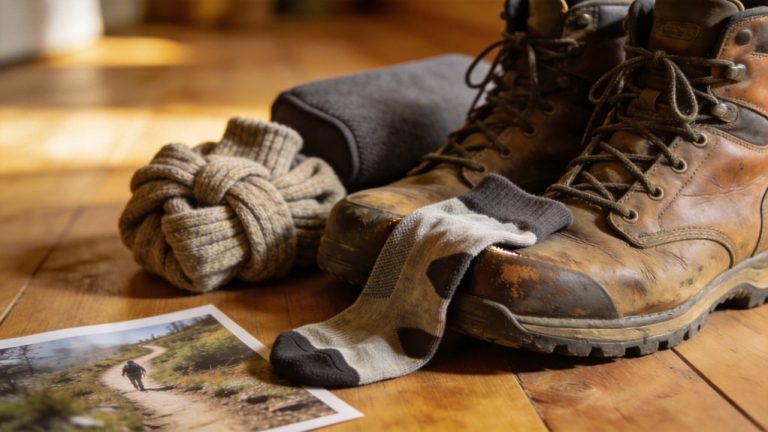
Prevention starts with moisture-wicking, padded hiking socks that reduce friction better than cotton athletic socks.
Emergency Shelter
What: Space blanket or large trash bag.
If injured and waiting for help, hypothermia risk exists even in summer. Temperature drops 3-5°F per 1,000 feet elevation. Add wind or wet conditions and body temperature drops fast.
When you’ll use it: Hopefully never. But it weighs 2 ounces.
“Most hiking injuries happen in last hour of daylight when tired hikers rush to finish before dark.”
Light Source
What: Headlamp or small flashlight. like this basic headlamp from Petzl.
If your hike takes longer than expected, you need to see the trail safely. Twisted ankles and falls spike when hikers push through fading light.
200 lumens lights a trail fine. You don’t need 1000-lumen tactical flashlights.
Footwear & Pack
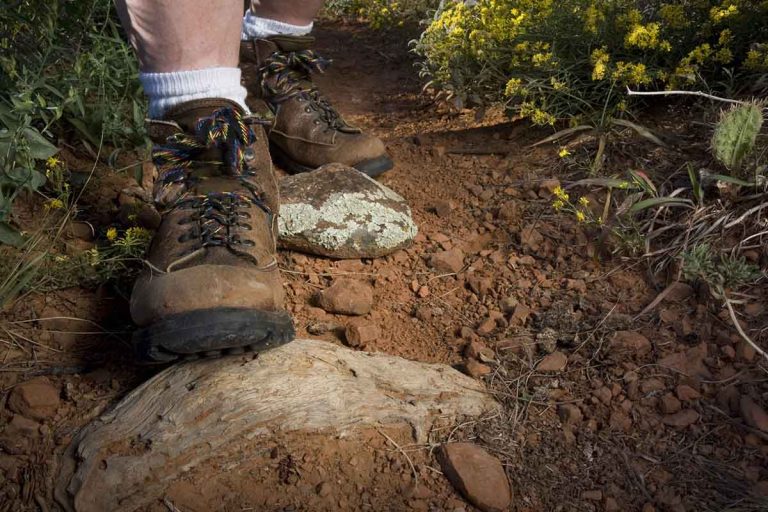
Trail shoes: Athletic shoes work for first paved walks. After 10+ hikes on dirt trails, upgrade to trail runners for better traction on loose surfaces, toe protection, and ankle support.
All‑rounder trail runners are often recommended for hiking. Examples: Brooks Cascadia for men and Brooks Cascadia for woman.
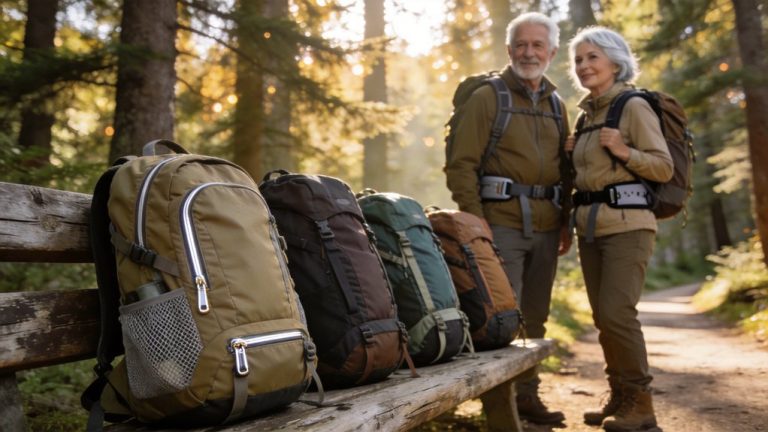
Daypack (10-25L with hip belt): Hip belt takes weight off shoulders and distributes it to hips. Reduces shoulder and back strain significantly for mature hikers.
A daypack carries water, snacks, and layers. For your first few hikes, any backpack works. Once hikes extend past two hours or you’re carrying more weight, learn how to choose and fit your first hiking backpack with features that matter for joint comfort and heat management.
Example: Osprey Talo 11L
Seasonal Additions: When Weather Changes Your List
WARM WEATHER (75°F+):
- Extra water
- Electrolyte replacement tablets
- Lightweight long-sleeve sun shirt
- Adults 50+ have reduced heat tolerance due to decreased sweating efficiency and cardiovascular changes
“If temperatures will exceed 85°F during your hike, reschedule. Heat safety outweighs pushing through.”
COOL WEATHER (Below 60°F):
- Insulating layer (fleece or puffy jacket)
- Hat and gloves
- Rain shell (mountain weather changes fast)
- Hypothermia risk increases with age
SHOULDER SEASONS (Spring/Fall):
- All cool weather items plus extra layer
- Check trail conditions for mud, ice, snow
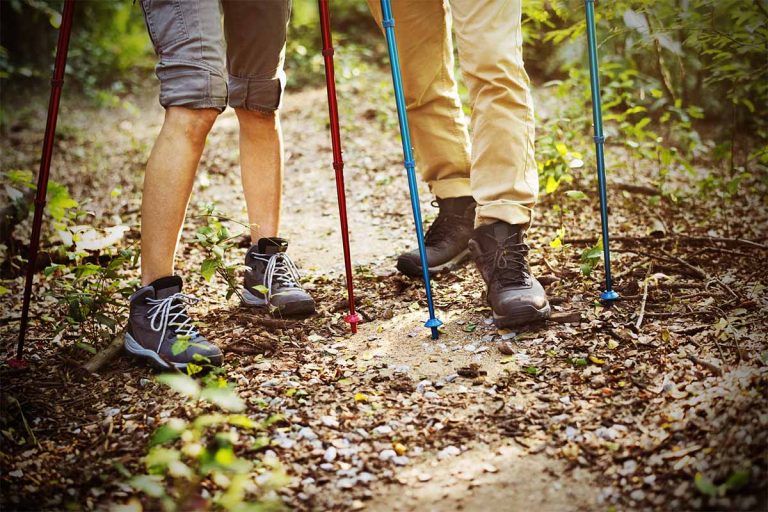
- Trekking poles for stability on slippery surfaces
Our season-by-season guide to what to wear on your first hike covers layering strategies for different temperatures and explains why cotton kills on humid days.
What You DON’T Need (Despite Marketing)
Permission to NOT buy things.
Hiking Boots
Marketing: “Ankle support prevents injury.”
Reality: Trail runners work fine for maintained trails. Lighter, no break-in period.
When you might want hiking boots: Rocky terrain, unstable ankles, heavy loads.
If you’re unsure which to choose, read our complete guide on hiking boots vs trail shoes for beginners over 50 covering age-specific biomechanics and clear decision logic.
Most ankle sprains happen on descents, not climbs. Slow down going downhill.
GPS Device
Marketing: “Never get lost.”
Reality: Phone with offline maps works perfectly. GPS devices cost $200-600.
When you might want one: Remote backcountry, multi-day trips.
Technical Hiking Clothing
Marketing: “Performance fabrics essential.”
Reality: Athletic wear works for first hikes. Cotton t-shirt is fine for 2-hour paved walk on clear day.
After 20+ hikes, you’ll know what matters to you.
Water Filtration
Marketing: “Never run out of water.”
Reality: Bring enough water for day hikes. Most beginner trails are 2-4 hours.
When you need it: Backcountry overnight trips only.
Trekking Poles (Requires Nuance)
You don’t need poles for your first 2-3 walks on flat paved paths. But prioritize acquiring them early, especially after age 50.
Research shows poles reduce knee impact by 25% and improve stability on uneven surfaces.
For adults 50+, poles transition from “nice to have” to “injury prevention equipment” quickly. Our guide to choosing trekking poles for joint support covers grip styles, weight, and shock absorption features.
Why poles matter more as you age: Balance decreases, knee cartilage thins, reaction time slows. Poles provide two additional points of contact with ground.
Example product: TrailBuddy Trekking Poles.
Budget Tiers: What to Spend
TIER 1: First Walks ($0)
Use what you own: water bottle, sunscreen, snacks, athletic shoes, hat. Buy nothing initially.
Philosophy: Prove you like outdoor walking before spending.
TIER 2: Moving to Trails ($30-50)
Add: first aid kit, headlamp, space blanket, tissues/sanitizer.
Keep using athletic shoes and regular backpack.
TIER 3: Committed Beginner ($300-500), After 20+ hikes
Trail runners or hiking shoes ($80-120), daypack with hip belt ($50-100), base layers: Merino or synthetic ($40-80), trekking poles ($60-120, priority for 50+).
You know what features matter to you now.
TIER 4: Regular Hiker ($600-900), After 50+ hikes
Quality boots for varied terrain ($120-180), technical clothing layers ($150-250), upgraded pack, better poles, GPS watch.
Buy for features you KNOW you need from experience.
Taking Your First Walk
Three things to do this week:
1. Pick an easy paved path near you: Look for trails under 3 miles with minimal elevation gain.
2. Check the weather: Pick a clear day, temperature between 60-75°F if possible.
3. Bring what you have: Water bottle, sunscreen, hat, snack.
Don’t buy anything yet.
Pre-hike checklist:
- Water bottle
- Sunscreen and hat
- Snack
- Comfortable shoes
- Phone
The gear gets you there safely. The experience gets you hooked.
Start simple, add gear as you add terrain.